Proudly serving Phoenix, Scottsdale, Glendale, Tempe, Mesa, Chandler & surrounding areasCall or Text 24/7: 480-264-9683
Aerial drone view of a suburban residential neighborhood with desert landscaping and saguaro cacti in Phoenix, AZ.

Flooring Installation & Surface Restoration in Goodyear, AZ

Phoenix Expert Flooring provides flooring installation in Goodyear, AZ, for homes and businesses. Our work includes luxury vinyl plank flooring, tile flooring, and hardwood flooring, along with laminate and carpet installation. We also handle floor repair and replacement, hardwood refinishing, epoxy flooring, and commercial flooring. Each recommendation accounts for the room, subfloor, use, and the West Valley's desert conditions.

Under direct sun, summer slab temperatures can exceed 140 degrees, while metro-area humidity can remain in the teens or single digits for months. Those conditions can open gaps in wood, stress rigid floors as slabs move, and speed wear when fine desert dust is tracked indoors. Our licensed and insured installers use moisture testing, subfloor preparation, expansion allowances, and manufacturer-specific methods before the finish surface goes down. That preparation helps match each material to the room instead of treating every Goodyear floor the same way.

Goodyear grew from roughly 95,294 residents at the 2020 census to an estimated 118,186 by 2024, creating a mix of new construction, resale renovations, and aging floors. We serve properties near Estrella Mountain Regional Park, Yuma Road, Van Buren Street, Palm Valley, Pebblecreek, and Canyon Trails, as well as surrounding West Valley communities.

★ ★ ★ ★ ★4.9/5 Average Rating - 20+ Years of Experience - Goodyear Flooring Company Specialists - Residential & Commercial
Goodyear Flooring Services

Flooring Services in Goodyear, AZ

Explore the flooring categories we install for Goodyear homes, rentals, offices, retail spaces, garages, workshops, and industrial buildings. Each option is evaluated for room use, sun and moisture exposure, slab condition, traffic, upkeep, and design goals. For another nearby service area, see Surprise, AZ .

Flooring Installation

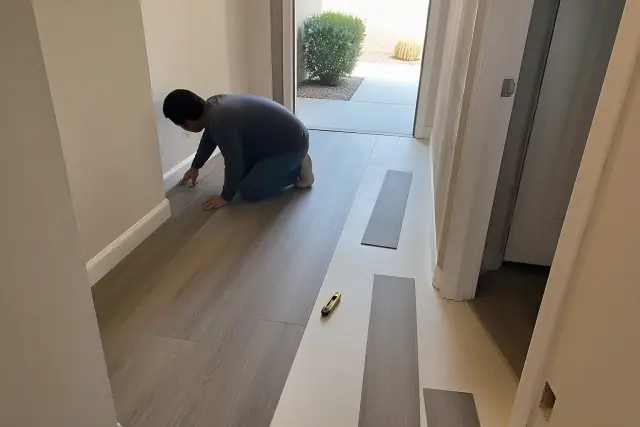
Worker installing luxury vinyl planks in a narrow hallway of a home in Goodyear, AZ.

We install wood, resilient, tile, carpet, epoxy, and polished or stained concrete surfaces for slab-on-grade homes and commercial spaces. Material choice and installation method are matched to moisture readings, subfloor condition, traffic, and design goals. Explore Service.

Explore Service

Luxury Vinyl Plank Flooring

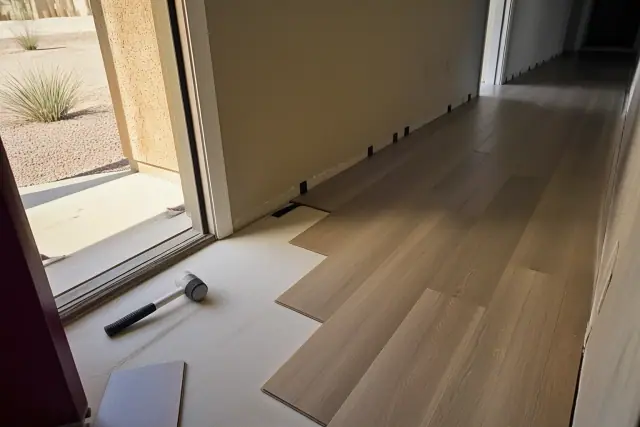
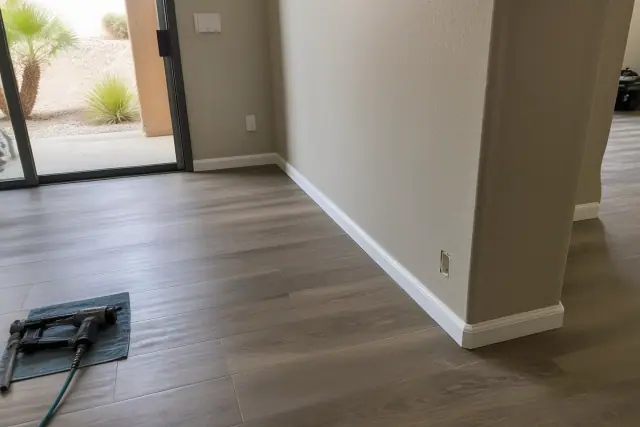
Luxury vinyl plank flooring installation with staggered pattern and tools in a residential hallway in Goodyear, AZ.

Luxury vinyl plank pairs thicker wear layers and rigid cores with realistic wood and stone visuals. It is fully waterproof, scratch-resistant, and dimensionally stable through Goodyear temperature swings. Installation typically runs $1,000 to $4,500 depending on square footage and subfloor preparation, and most rooms are walkable within hours of the final plank. Explore Service.

Explore Service

Tile Flooring

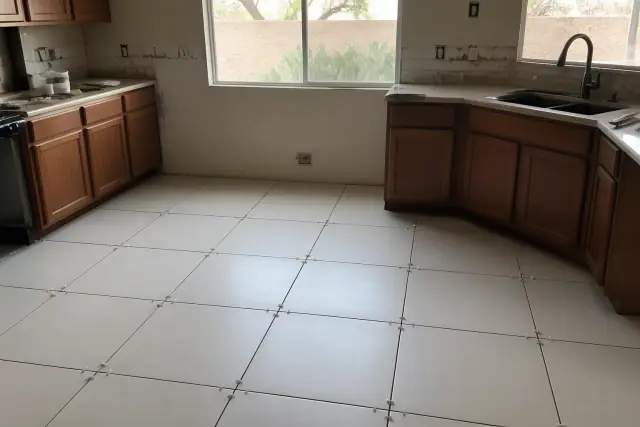
Ceramic tile flooring with spacers installed on a kitchen floor during a renovation in Goodyear, AZ.

Ceramic and porcelain tile handle heat and UV exposure well in entries, kitchens, and outdoor-adjacent rooms. We set tile with thin-set mortar over a prepared substrate and space movement joints according to Tile Council of North America guidelines. Large-format porcelain and wood-look plank tile suit many open-concept Goodyear floor plans. Explore Service.

Explore Service

Hardwood Flooring

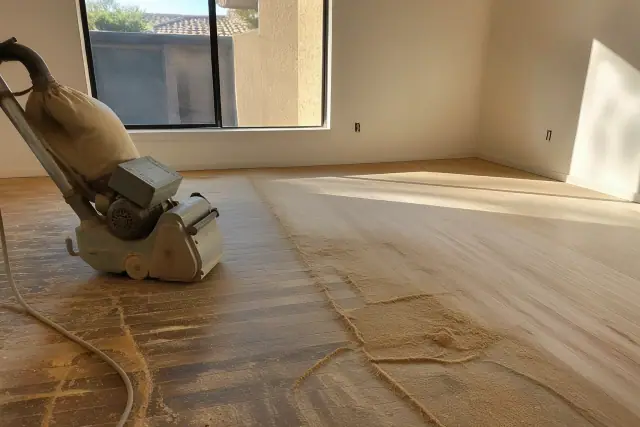
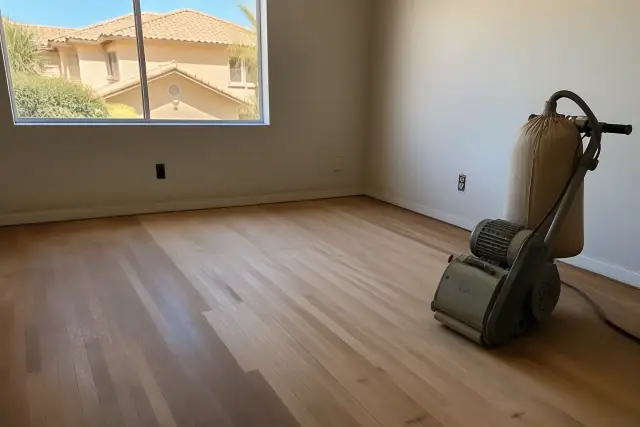
Industrial sander smoothing hardwood bedroom flooring during a restoration project in Goodyear, AZ.

Solid hardwood should acclimate on-site for 3 to 5 days and needs expansion gaps at walls and transitions in Arizona's dry air. We install oak, hickory, and maple in site-finished or prefinished formats using nail-down or glue-down methods suited to the subfloor. Engineered hardwood is often a more stable choice because its plywood core resists seasonal movement.

Laminate Flooring

New laminate flooring installation with baseboards being secured in a residential living space in Goodyear, AZ.

Laminate offers the look of wood or stone for bedrooms, hallways, and living areas without direct water exposure. Installation runs roughly $6.91 to $11.81 per square foot, including materials and labor. Its floating-floor method can reduce disruption compared with glue-down products, but it still requires a flat subfloor and correct perimeter clearance.

Carpet Installation

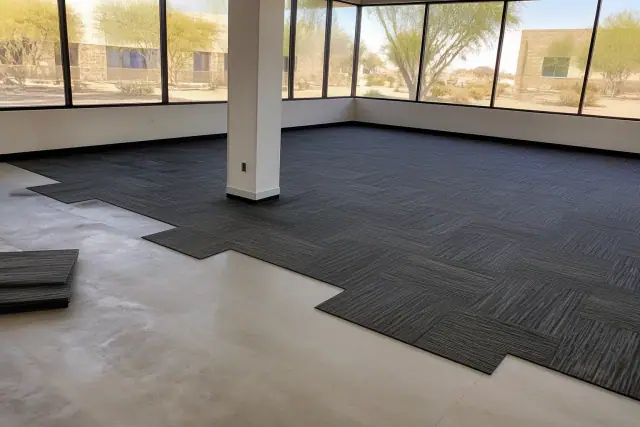
Carpet tiles being installed in a sunny office workspace in Goodyear, AZ.

Carpet brings comfort and sound dampening to bedrooms and media rooms. Proper tack strip, seam sealing, and stretching to manufacturer specifications help prevent rippling and early wear. Stain-resistant and low-VOC options are available for households concerned about children, pets, or allergies.

Floor Repair & Replacement

Industrial sander smoothing hardwood floor planks during a home renovation in Goodyear, AZ.

Floor damage commonly follows a failed appliance line, sun exposure near unshaded windows, slab movement, or direct impact. We assess whether closely matched tile or hardwood can be repaired in place or whether widespread damage and discontinued materials make full-room replacement more practical. Homeowners can also replace dated carpet or worn laminate as part of a planned upgrade.

Hardwood Floor Refinishing

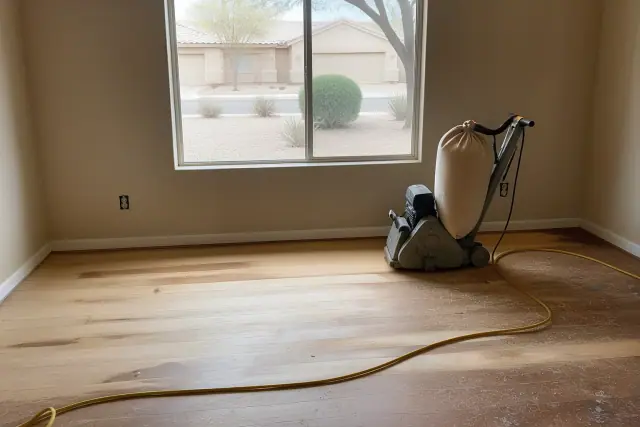
Industrial sander smoothing raw hardwood floor planks in a bedroom under renovation in Goodyear, AZ.

Hardwood refinishing removes the worn finish with progressively finer sanding grits before a new stain and polyurethane topcoat are applied. Most hardwood floors can be refinished 4 to 6 times over their lifespan before the wear layer becomes too thin for another sanding. That can make refinishing more practical than replacing an otherwise sound floor.

Epoxy Flooring

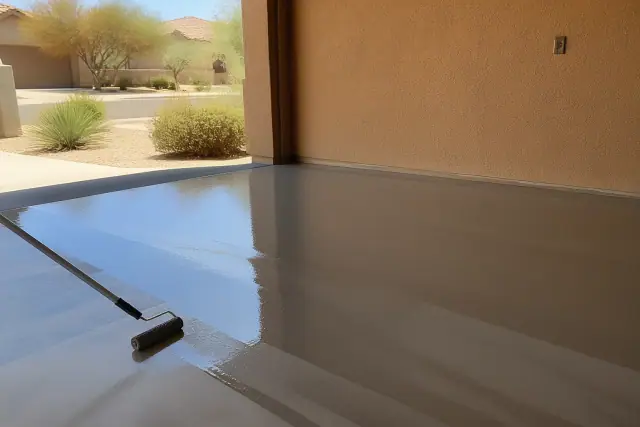
Professional applying high-gloss epoxy resin to a concrete garage floor at a jobsite in Goodyear, AZ.

Epoxy flooring suits garages, workshops, and light commercial spaces exposed to oil, chemicals, and abrasive desert dust. We mechanically grind the concrete to open its pores before applying a multi-coat epoxy system. The finished surface seals concrete that would otherwise be vulnerable to surface degradation from heat and UV exposure.

Commercial Flooring

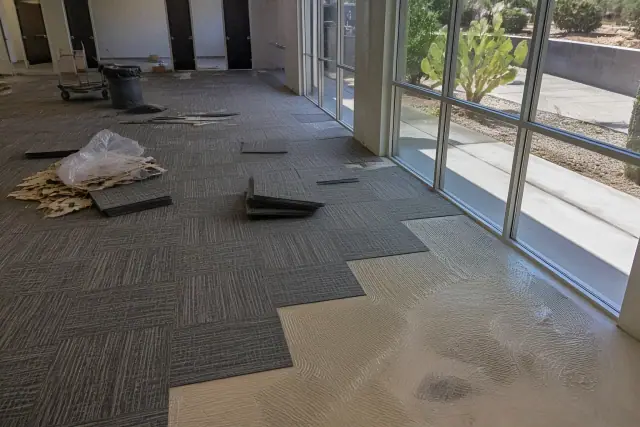
Durable carpet tiles being installed in an office workspace in Goodyear, AZ.

We install commercial-grade LVT, porcelain tile, epoxy, and carpet tile for offices, retail spaces, warehouses, and industrial buildings near Loop 303 and the Phoenix Goodyear Airport industrial park. Commercial carpet tile lasts 8 to 10 years on average, with traffic and maintenance affecting the replacement cycle. Material selection also accounts for ADA transitions, slip resistance, occupancy requirements, and the need to limit business disruption.

Flooring Selection

How to Choose Flooring for Goodyear Spaces

The right floor depends on more than appearance. We compare desert-climate performance, room use, moisture exposure, slab condition, traffic, maintenance, budget, and installation requirements before recommending a material. The factors below help narrow the choice for a Goodyear home or commercial property.

Desert Climate Performance

Luxury vinyl plank and porcelain tile generally perform well against Goodyear heat, UV exposure, and dry conditions. Engineered hardwood offers greater dimensional stability than solid hardwood when a wood surface is preferred. Material recommendations also account for west-facing windows and patio-door temperature swings.

Room Use and Moisture Exposure

Tile and waterproof vinyl fit entries, kitchens, and spaces next to outdoor areas, while carpet can add comfort and sound control in bedrooms or media rooms. Laminate belongs in dry living areas without direct water exposure. Garages and workshops may benefit from epoxy or polished and stained concrete.

Subfloor and Slab Condition

Most Goodyear properties use slab-on-grade construction, so concrete moisture, flatness, existing cracks, and seasonal movement influence the installation method. Uneven areas may need self-leveling compound, and some floors require underlayment for moisture or sound control. Addressing the substrate first helps prevent cracks, peaking seams, and visible imperfections.

Project Budget and Installation Scope

Flooring installation nationally runs $3 to $15 per square foot depending on material and labor complexity, while laminate projects may run $300 to $4,000 depending on square footage. Estimates should separate material and labor so a lower initial price does not lead to redoing failed work in three years. The flooring installation services market was valued around $185.3 billion in 2025, reflecting the scale of property-owner investment in correct installation.

Maintenance and Expected Lifespan

Vinyl plank and tile need regular sweeping and occasional damp mopping, while hardwood needs a pH-neutral cleaner and protection from standing water. Carpet benefits from routine vacuuming and periodic professional cleaning. Entry mats help keep fine desert sand from scratching hard finishes or accelerating wear on soft flooring.

Residential or Commercial Traffic

Whole-home renovations and rental properties often prioritize waterproof surfaces and scratch resistance, while offices and retail spaces need commercial wear layers and maintainable finishes. Warehouses and workshops may require epoxy, polished concrete, or stained concrete for heavier traffic and easier upkeep. Commercial transitions and slip resistance must also match how the building is used.

Desert Flooring Issues

Common Flooring Problems in Goodyear Properties

Heat, low humidity, dust, sunlight, water, and an unprepared slab can each shorten a floor's useful life. Identifying the cause before choosing a repair or replacement helps avoid repeating the same failure under a new surface. We inspect both the visible damage and the substrate beneath it.

Request Floor Assessment

Heat-Driven Slab Movement

Seasonal conditions can range from summer highs over 110 degrees to winter nights in the 40s, causing concrete slabs to expand and contract. Tile needs correctly spaced movement joints, and rigid or floating floors need proper expansion allowance. Without those details, grout can crack and floor edges can bind.

Low Humidity and Wood Gaps

Phoenix metro relative humidity can stay in the teens or single digits for months, pulling moisture from solid wood. Rushed acclimation and wide-plank construction can make seasonal gapping more noticeable. Engineered cores, on-site acclimation, and correct expansion gaps help manage that movement.

Desert Dust and Surface Wear

Fine sand from unpaved lots, new development zones, agricultural land, and gravel-heavy job sites can act like an abrasive indoors. It accelerates wear on carpet and can scratch hardwood finishes. Entry mats and consistent cleaning reduce how much grit reaches the floor.

Sun Fading Near Windows

Unshaded and west-facing windows expose floors to intense heat and UV light. Wood and laminate can fade near those openings, while ceramic, porcelain, and suitable vinyl products are generally more tolerant. Material choice should reflect each room's actual exposure rather than a whole-home assumption.

Water Damage and Moisture

Failed appliance lines and standing water can damage wood, laminate, and the layers beneath a finished floor. A spot repair may work when the material can be matched and the damage is contained. Widespread moisture damage usually requires a broader replacement plan after the source is resolved.

Uneven or Unprepared Subfloors

Vinyl can telegraph depressions or ridges, laminate can peak when perimeter clearance is missing, and tile can crack when slab movement is ignored. Moisture testing, leveling compounds, suitable underlayment, and correct expansion gaps address those causes before installation. Surface preparation is part of the flooring system, not an optional finishing step.

Why Choose Us

Why Choose Phoenix Expert Flooring in Goodyear, AZ?

Phoenix Expert Flooring combines local desert-climate knowledge with licensed and insured installation. We measure, test, prepare, and document each project instead of choosing materials by appearance alone. Homeowners and businesses receive an upfront assessment of the surface, substrate, installation method, and expected care.

Licensed and Insured Flooring Work

Licensed and insured service protects the property during installation and supports the documentation many manufacturers require for warranty claims. It also creates a clear record of the work performed. Product-specific coverage still depends on the chosen manufacturer and flooring line.

Standards-Based Installation

Installation follows manufacturer specifications and, where applicable, Tile Council of North America or National Wood Flooring Association guidance. That includes spacing, adhesives, fastening methods, underlayment, and expansion gaps appropriate to the material. Work areas are contained to limit dust and disruption.

Clear Estimates and Project Documentation

Every estimate separates material and labor so the project scope is understandable before work begins. Repair and refinishing assessments explain whether a spot repair, partial replacement, or full-room replacement is realistic. Installation documentation and care instructions remain available for future maintenance or product-warranty questions.

A Clear Six-Step Process

Our Flooring Installation Process in Goodyear, AZ

The installation process moves from measurement and testing through preparation, installation, and final care guidance. Each step is adjusted to the chosen flooring and the condition of the Goodyear property. Addressing substrate and material requirements early helps prevent expensive surprises after work begins.

01.

In-Home Measurement and Assessment

We measure square footage and inspect existing damage, transitions between rooms, subfloor condition, and structural concerns. The visit also documents how each room is used and where sun, water, or traffic may affect the material choice. Problems found here are included in the project scope before installation.

02.

Slab Moisture and Subfloor Testing

Concrete slabs are checked for moisture with a calcium chloride test or relative humidity probe. We also evaluate flatness, cracks, and areas that may need leveling or repair. Those readings guide underlayment, adhesive, and preparation decisions.

03.

Material Selection and Detailed Estimate

Material choices are compared against performance, budget, room use, maintenance, and design goals. The estimate separates labor and material and identifies any subfloor preparation required. Commercial scopes also account for traffic, transitions, slip resistance, and operating-hour constraints.

04.

Material Acclimation and Preparation

Materials are ordered with a typical 5 to 10 percent overage for cuts and future repairs. Hardwood is acclimated on-site, while vinyl and laminate boxes are opened so the product can reach room temperature. The slab is then cleaned, repaired, or leveled as the selected installation requires.

05.

Professional Flooring Installation

Installers follow the selected product's requirements for thin-set, adhesives, fasteners, underlayment, and expansion spacing. Nail-down, glue-down, floating, stretch-in, grinding, and multi-coat methods are used only where the material and substrate call for them. Work areas stay contained to limit dust and disruption elsewhere in the property.

06.

Final Walkthrough and Care Plan

After installation, we review cleaning products, water precautions, and maintenance for the finished material. We explain what to expect during the first few weeks, including normal settling sounds or minor gap changes as the floor adjusts to indoor humidity. Adjustments and punch-list items are addressed before the project is considered complete.

Flooring Applications

Flooring Plans for Goodyear Homes & Businesses

Case Study 1: Whole-Home Renovation: Replacing dated carpet with luxury vinyl plank can create a waterproof, scratch-resistant surface suited to connected living spaces or rental properties.

Case Study 2: Hardwood Renewal: When the wood and wear layer remain sound, sanding, staining, and applying a polyurethane topcoat can restore the floor without a full replacement.

Case Study 3: Commercial Build-Out: Commercial LVT, porcelain tile, epoxy, or carpet tile can be selected for traffic and upkeep, then installed in phases when a business cannot close completely.

Plan Your Flooring Project

Schedule a Goodyear
Flooring
Consultation

Start with a free flooring consultation and an in-home estimate based on the actual square footage, substrate, and material. We will explain the preparation, installation method, labor, material cost, care needs, and expected schedule before you commit. Use the estimate form or call to discuss a residential or commercial project.

Goodyear Flooring Help

Flooring Installation FAQs for Goodyear, AZ

These answers cover project timing, material selection, pricing, warranties, maintenance, repairs, and service coverage. A consultation can account for the square footage, subfloor, sun exposure, traffic, and flooring product in your specific property.

Call Flooring Experts

Timing depends on the material, square footage, acclimation, and subfloor preparation. A single room of vinyl plank or laminate can often be completed in a day, while whole-home hardwood or tile projects typically take 3 to 7 days. Larger commercial projects may be phased to reduce disruption.

Luxury vinyl plank and porcelain tile generally perform well because they resist heat, UV fading, and dry-climate movement. Engineered hardwood is more dimensionally stable than solid hardwood when a wood surface is preferred. We also consider each room's sun exposure, moisture, and use before recommending a final material.

Laminate projects may run $300 to $4,000 depending on square footage, while vinyl flooring typically runs $1,000 to $4,500. Nationally, overall flooring installation averages $3 to $15 per square foot including labor and materials. A free consultation provides a property-specific estimate with material and labor separated.

Many manufacturer warranties depend on following the product's installation specifications. We follow those requirements and provide documentation that can support a future product-warranty claim. Coverage terms vary by manufacturer and flooring line, so the applicable details are reviewed during the estimate.

Commercial-grade LVT, porcelain tile, epoxy, and carpet tile can handle heavier traffic than residential products. Epoxy suits warehouses, garages, and industrial spaces exposed to chemicals or equipment, while carpet tile lets offices replace damaged sections individually. Selection should balance upfront cost, expected lifespan, maintenance, transitions, and slip resistance.

Sweep vinyl plank and tile regularly and damp mop them as the product allows; clean hardwood with a pH-neutral product and keep standing water off it. Carpet benefits from routine vacuuming and professional deep cleaning roughly once a year. Entry mats reduce the fine dust and sand tracked in from unpaved areas and construction zones.

Solid hardwood should acclimate on-site for 3 to 5 days before installation in Goodyear's dry conditions. Actual preparation still depends on the product, room environment, and moisture readings. Correct wall and transition gaps remain important after acclimation.

Luxury vinyl plank typically uses thicker wear layers, rigid cores, and more realistic wood or stone visuals. It is fully waterproof, scratch-resistant, and dimensionally stable through local temperature swings. Those traits make it useful for whole-home renovations and rental properties.

Concrete slabs expand and contract with seasonal temperature changes. Movement joints spaced according to Tile Council of North America guidance give the tile assembly room to respond without concentrating stress in grout lines or tiles. The substrate must also be prepared before thin-set and tile are installed.

A spot repair may be realistic when damage is contained and matching tile or hardwood is available. Widespread water damage, extensive slab-related cracking, or a discontinued product may make full-room replacement more practical. We assess the cause and explain the repair, partial-replacement, and full-replacement options before work begins.

We measure the space, inspect cracks and flatness, review transitions, and look for existing damage. Concrete moisture is tested with a calcium chloride test or relative humidity probe. The findings determine whether leveling, repair, underlayment, or another preparation step is needed.

Epoxy is suited to garages, workshops, and light commercial spaces exposed to oil, chemicals, and abrasive dust. Mechanical grinding opens the concrete pores before a multi-coat system is applied. That preparation helps the coating seal the slab and withstand demanding use.

Carpet provides comfort and sound dampening where moisture resistance is less important. Laminate can provide a wood or stone look in dry bedrooms, hallways, and living areas. The choice depends on traffic, cleaning preferences, allergies, pets, and design goals.

We work in Estrella, Palm Valley, Canyon Trails, Pebblecreek, Sedella, and neighborhoods near Goodyear Ballpark, the Goodyear Civic Center Historic District, and Loop 303. Nearby coverage includes Buckeye, Verrado, Avondale, Litchfield Park, and Surprise, AZ.

We work around operating hours when possible and can phase installation by section for businesses that cannot close completely. Commercial projects may also be coordinated with property management or general contractors. The exact schedule depends on the material, preparation, space, and operating requirements.