Proudly serving Phoenix, Scottsdale, Glendale, Tempe, Mesa, Chandler & surrounding areasCall or Text 24/7: 480-264-9683
Aerial drone view of a suburban residential neighborhood with desert landscaping and saguaro cacti in Phoenix, AZ.

Flooring Installation & Material Replacement in Mesa, AZ

Phoenix Expert Flooring provides flooring installation for homes and businesses throughout Mesa, Arizona. Our crews install luxury vinyl plank, tile, hardwood, laminate, carpet, epoxy, and commercial flooring. We also handle floor repair and replacement and hardwood floor refinishing when an existing surface needs more than routine upkeep. Each recommendation is matched to the room, slab condition, traffic, and desert exposure.

Mesa's triple-digit heat, strong window exposure, monsoon humidity shifts, and slab-on-grade construction can punish a poorly prepared floor. We are licensed through the Arizona Registrar of Contractors and insured, and our crews check moisture, flatness, and material fit before installation begins. A free written estimate explains measurements, cost, and timeline before you commit. Proper preparation helps prevent early gaps, loose tile, peeling coatings, and other avoidable failures.

Mesa is Arizona's third-most populous city, with a population of 504,258 across roughly 138 square miles. We work from the downtown grid near Main Street and Country Club Drive to Eastmark, Signal Butte, Falcon Field, and the Superstition Springs corridor. Request a free in-home estimate for a practical flooring recommendation built around your space.

★ ★ ★ ★ ★4.9/5 Average Rating - 20+ Years of Experience - Mesa Flooring Company Specialists - Residential & Commercial
Flooring Services

Flooring Options for Mesa, AZ

Choose from full installation, repair, refinishing, and coating services for Mesa homes, retail buildouts, medical offices, warehouses, and rental properties. Material recommendations account for concrete slabs, room use, sun, dust, and seasonal humidity. Our East Valley coverage also includes Chandler, AZ , along with Gilbert, Queen Creek, Tempe, and Apache Junction.

Flooring Installation

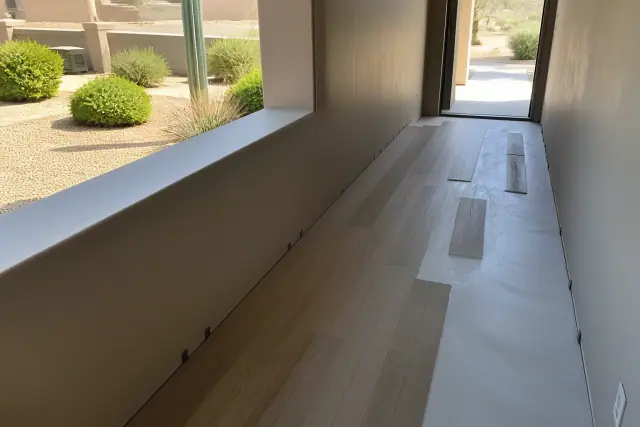
Worker installing luxury vinyl planks in a narrow hallway with a view of a xeriscaped front yard in Mesa, AZ.

Residential and commercial installation starts with measurements, subfloor assessment, and a product choice suited to the room. Crews handle removal, leveling, installation, transitions, cleanup, and the final walkthrough.

Explore Service

Luxury Vinyl Plank Flooring

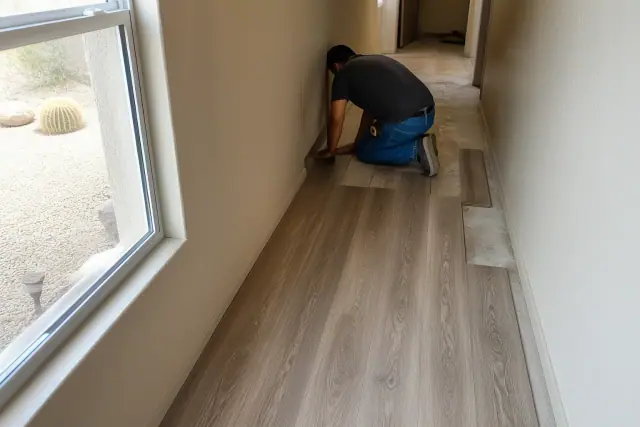
Worker installing luxury vinyl plank flooring in a staggered pattern in a hallway in Mesa, AZ.

Waterproof luxury vinyl plank handles temperature and humidity changes while delivering a convincing wood-grain look. Click-lock and glue-down installation over prepared concrete typically costs $3 to $8 per square foot with materials and labor, and many residential rooms finish in a single day.

Explore Service

Tile Flooring

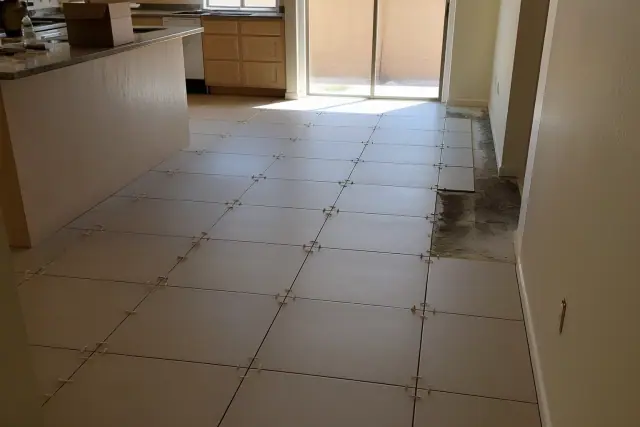
Ceramic floor tiles with alignment spacers in a kitchen in Mesa, AZ.

Porcelain and ceramic tile suit hot, dusty entryways, kitchens, and bathrooms. Installation follows Tile Council of North America methods with climate-rated thinset and properly located expansion joints for Mesa slab movement, including large-format layouts with fewer grout lines.

Explore Service

Hardwood Flooring

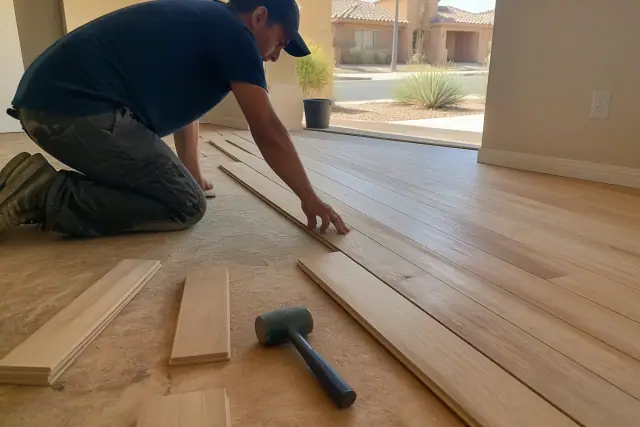
Technician installing raw hardwood flooring planks in a Mesa, AZ home with tools and materials nearby.

Engineered hardwood is usually the better fit over Mesa concrete because it tolerates seasonal humidity changes more effectively than solid wood. We follow National Wood Flooring Association moisture-testing protocols before installation to reduce the risk of gapping, cupping, or shrinkage.

Laminate Flooring

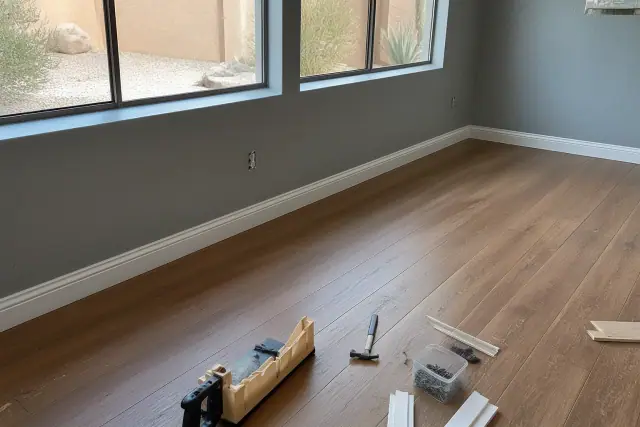
Laminate flooring installation meeting baseboards with tools on the floor of a basement in Mesa, AZ.

Laminate offers a wood or stone appearance at a lower price point and resists fading under Arizona sunlight. Installed pricing typically runs $6.91 to $11.81 per square foot, and available products can meet North American Laminate Flooring Association standards for wear and impact resistance.

Carpet Installation

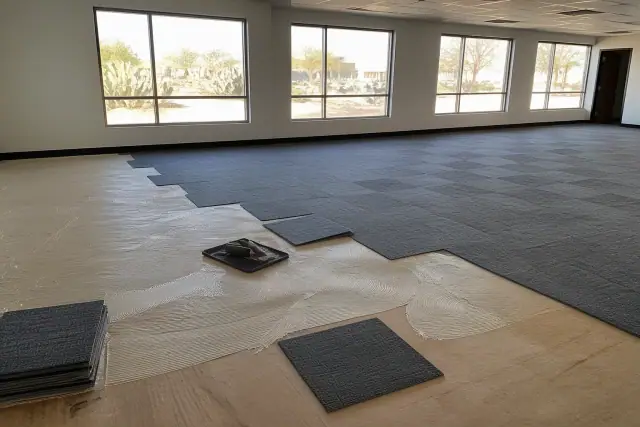
Technician installing carpet tiles on a leveled wooden subfloor in a Mesa, AZ office workspace.

Carpet adds comfort in bedrooms and formal living areas where water resistance is not the priority. We size tack strip and padding for each traffic pattern and follow Carpet and Rug Institute guidance, with attention to padding density in Mesa's dry air.

Floor Repair & Replacement

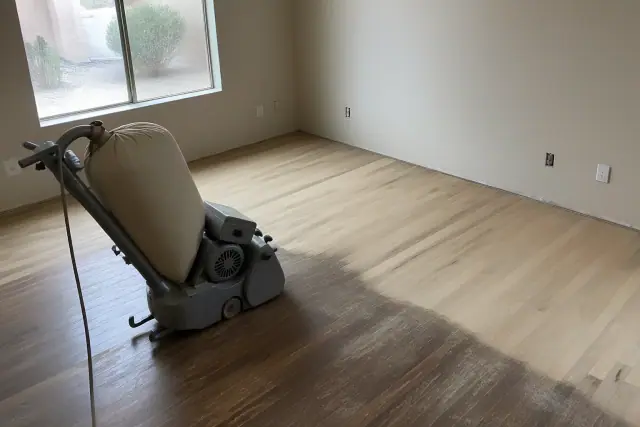
Industrial sander smoothing hardwood floor planks during a bedroom renovation in Mesa, AZ.

Repair and replacement address loose or faded planks, pet wear, water damage, and surfaces affected by monsoon flooding. We inspect the substrate and damaged area before deciding whether a focused repair or full replacement is the more practical path.

Hardwood Floor Refinishing

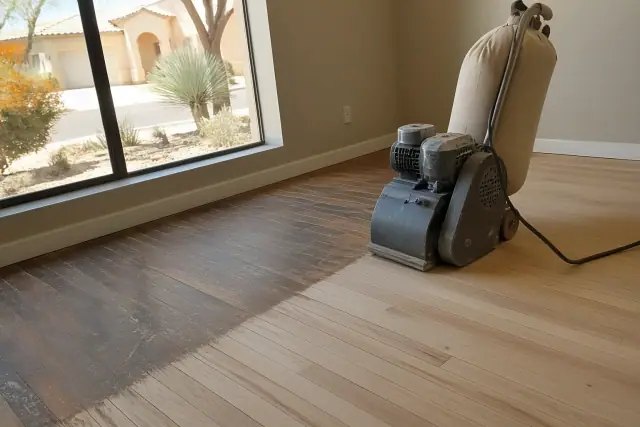
Industrial sander smoothing hardwood floor planks in a room with a view of a desert landscape in Mesa, AZ.

Refinishing can restore worn hardwood for less than complete replacement when the floor has enough usable material. We assess the wood species, existing finish, sanding needs, humidity conditions, and required number of coats before quoting the work.

Epoxy Flooring

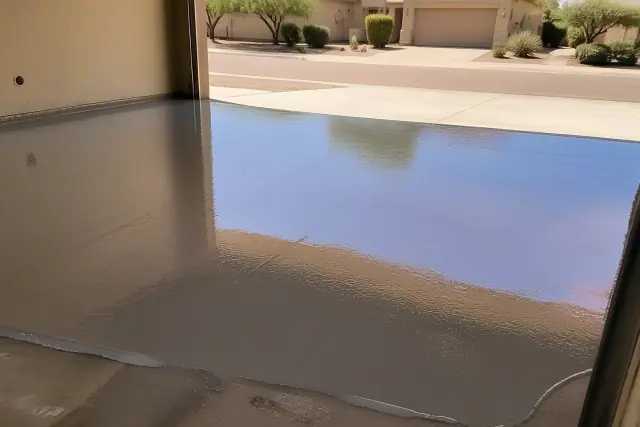
High-gloss epoxy resin garage flooring in a Mesa, AZ home with a view of a sun-bleached residential yard.

Multi-coat epoxy systems protect commercial and garage concrete from dust, traffic, and heat-softened tires. Surface profiling and moisture mitigation are essential because poor preparation can cause delamination, while a properly cured system can handle summer garage temperatures that regularly exceed 100 degrees.

Commercial Flooring

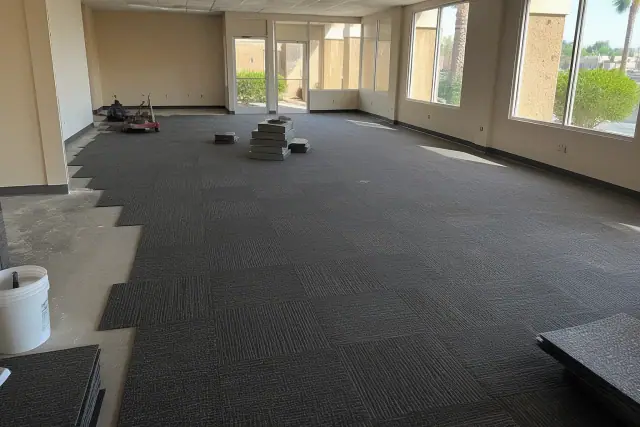
Commercial carpet tile installation in a workspace during an interior renovation in Mesa, AZ.

Commercial flooring serves retail, medical, warehouse, and multi-tenant spaces along Mesa corridors near the 202 and Superstition Springs. Project planning can address operating hours, ADA transition-strip compliance, slip resistance, and IIC/STC sound ratings while keeping the buildout schedule coordinated.

Flooring Selection

How to Choose Flooring for Mesa Homes

The right floor depends on water exposure, direct sun, daily traffic, comfort, budget, and the condition of the slab beneath it. We compare those demands before recommending tile, luxury vinyl plank, engineered hardwood, laminate, carpet, sheet vinyl, or another supported surface.

Room Use and Water Exposure

Kitchens, bathrooms, laundry areas, and garage conversions need different moisture performance than bedrooms or formal rooms. Waterproof LVP, porcelain tile, sheet vinyl, carpet, and wood are compared according to how the room is actually used.

Climate-Stable Materials

Low desert humidity, monsoon moisture, and direct UV exposure favor products that remain stable through seasonal changes. Engineered hardwood and LVP generally tolerate these swings better than solid hardwood, while porcelain tile handles heat and dust with little concern.

Slab and Moisture Testing

A flooring choice is only as reliable as the substrate beneath it. Calcium chloride or in-situ probe testing identifies slab moisture before moisture-sensitive material is installed, while flatness checks reveal leveling or repair needs.

Budget and Service Life

Compare the complete installed cost with expected upkeep, repairability, and longevity rather than material price alone. Depending on the material and care, a properly installed floor can serve a Mesa property for fifteen to twenty-five years.

Trade-Standard Installation

Material-specific methods matter: TCNA guidance informs tile setting, NWFA protocols guide wood moisture checks, NALFA standards address laminate durability, and CRI guidance supports carpet installation. Matching the method to the surface protects performance beyond the first day.

Traffic and Upkeep

Pets, children, customers, rolling loads, and desert dust change what durability and cleaning routine a floor needs. Tile and LVP make dust cleanup simple, carpet prioritizes comfort, and commercial surfaces can be selected for traffic and slip-resistance demands.

Mesa Flooring Conditions

Common Flooring Problems in Mesa Homes

Mesa floors face heat, UV exposure, seasonal humidity, dust, expansive soils, and concrete-slab moisture. Identifying the actual cause before installation or repair helps prevent the same failure from returning.

Request a Flooring Assessment

Moisture Beneath the Slab

Moisture moving through slab-on-grade construction can disrupt adhesives, wood, laminate, or coatings. Skipped testing is a frequent reason moisture-sensitive floors fail within the first year, so readings should guide barriers and product choice.

Slab Movement and Cracked Tile

Expansive clay and caliche layers in the East Valley can transmit seasonal movement into rigid flooring. Correct expansion joints and substrate preparation help tile accommodate that minor movement instead of concentrating stress at grout lines or edges.

Heat and UV Exposure

Summer slab temperatures under direct sun can climb well past 140 degrees, while south- and west-facing windows can fade or dry unprotected surfaces. Product stability, acclimation, adhesives, and window exposure should all be considered before installation.

Seasonal Humidity Swings

Mesa is extremely dry for much of the year, then relative humidity rises during monsoon season from June through September. Solid wood moves more through that cycle, making engineered wood or LVP a more stable option in many rooms.

Uneven Subfloors and Residue

Unexpected dips, high spots, wide grout lines, or old adhesive can keep a new surface from lying flat and bonding correctly. Removal, leveling, profiling, or residue treatment should happen before new flooring covers the evidence.

Dust, Pet, and Water Damage

Desert wind and haboob dust work into transitions, while pet claws, spills, and monsoon water can damage exposed finishes or planks. Repair begins by identifying whether the issue is limited to the wear surface or extends into the flooring and subfloor.

Why Choose Us

Why Mesa Chooses Phoenix Expert Flooring

Professional installation protects a visible, long-term investment through careful testing, preparation, and finish work. Phoenix Expert Flooring combines documented credentials, desert-specific experience, and clear project planning for residential and commercial spaces.

Licensed and Insured Service

We operate as a licensed flooring installer through the Arizona Registrar of Contractors and carry insurance. That gives homeowners, property managers, and general contractors a clear professional foundation for the work.

Mesa Climate Experience

Our work spans postwar and 1970s homes near downtown and Falcon Field, newer construction in Eastmark and Signal Butte Ranch, and commercial properties across Mesa. That range helps us spot slab moisture, subfloor dips, sun exposure, and material-fit issues before they become callbacks, so the floor can still perform in year ten.

Written Estimate and Project Scope

The free estimate measures the space, identifies preparation needs, and sets out expected cost and timing before work begins. The project scope explains the planned materials, installation steps, transitions, and cleanup, with a final walkthrough to confirm the completed work.

Disciplined Process

Our Flooring Installation Process in Mesa

Every project follows a consistent sequence from measurement through cleanup, adapted to the material and existing surface. We explain realistic timing up front so acclimation, demolition, setting, coating, or finish-drying time is accounted for before the schedule is set.

01.

Estimate and Measurement

We walk the space, measure square footage, discuss material options, inspect visible conditions, and provide a free written quote. The estimate sets a practical scope, cost, and timeline before you decide whether to proceed.

02.

Moisture and Subfloor Testing

The crew checks slab moisture, flatness, soundness, grout lines, and residue before covering the substrate. Results determine whether a moisture barrier, leveling, repair, profiling, or removal step is needed.

03.

Material Acclimation

Flooring materials typically rest in the conditioned room for 48 to 72 hours before installation. This lets the product adjust from warehouse conditions to the home's actual temperature and humidity.

04.

Removal and Subfloor Preparation

Existing flooring is removed and prepared for disposal when the new system cannot go over it. The exposed subfloor is then leveled, repaired, cleaned, or profiled so the installation starts on a sound surface.

05.

Material-Specific Installation

The selected flooring is installed to manufacturer specifications and applicable trade methods. Tile receives suitable thinset and movement details, wood follows moisture protocol, and epoxy receives the surface profile and coat sequence it needs.

06.

Transitions, Walkthrough, and Cleanup

We complete trim, thresholds, and transitions at doorways and material changes, then review the finished floor with you. Debris and removed material are hauled away so the space is ready for normal use after applicable cure or drying time.

Common Project Outcomes

Flooring Results for Mesa Homes & Businesses

Case Study 1: Residential LVP: Click-lock or glue-down planks can create a waterproof, easy-clean surface over properly prepared concrete or suitable existing tile after level and moisture checks.

Case Study 2: Tile and engineered wood: Expansion details, slab testing, and acclimation give rigid or moisture-sensitive materials a better foundation for Mesa's soil and humidity conditions.

Case Study 3: Commercial and garage surfaces: Coordinated schedules, compliant transitions, surface profiling, and material-specific installation support retail, medical, warehouse, and garage use.

Plan Your Project

Schedule a Mesa Flooring
Installation
Estimate

Tell us which rooms or business areas need installation, repair, replacement, refinishing, or epoxy. We will measure the space, assess the subfloor, discuss products and budget, and provide a free written estimate with no obligation. Mesa appointments can typically be scheduled within a few days, sometimes the same week depending on the current job load.

Mesa Flooring Help

Flooring Installation FAQs for Mesa, AZ

Get straightforward answers about flooring costs, timing, material choices, slab preparation, warranties, and East Valley service coverage. A site visit is still the best way to match general guidance to your room and substrate.

Call Our Flooring Team

Ask about Arizona Registrar of Contractors licensing, liability insurance, moisture testing, subfloor preparation, material and labor pricing, and manufacturer warranty coverage. Request a written estimate that explains what removal, leveling, transitions, cleanup, and timing are included.

General installed pricing runs $3 to $15 per square foot depending on material and preparation. A typical 500-square-foot job ranges from $1,528 to $4,859 installed, averaging around $12.50 per square foot; laminate commonly runs $6.91 to $11.81 per square foot, while hardwood and large-format tile can cost more. We provide a free itemized estimate for the actual space.

Most single-room residential installations take one to two days after acclimation. Whole-house projects, hardwood refinishing, or large tile installations can take a week or longer depending on square footage, demolition, setting time, and drying between coats. The project estimate includes a realistic schedule.

Luxury vinyl plank and porcelain tile perform well because they resist low humidity, dust, heat, and ordinary water exposure. Engineered hardwood is often preferable to solid hardwood where a real wood surface is wanted because its layered core handles seasonal humidity movement more effectively. The best choice still depends on the room, traffic, and budget.

Yes. The free in-home estimate includes measurements, a subfloor assessment, material discussion, and a written quote for installation, repair, replacement, or refinishing. There is no obligation to move forward after the estimate.

Luxury vinyl plank and laminate can often go over existing tile or a properly prepared concrete slab. The surface must first be checked for flatness, moisture, structural soundness, and grout-line depth. Uneven or compromised tile may need removal before installation.

Engineered hardwood is generally more stable than solid hardwood through Mesa's dry periods and monsoon humidity. It can be installed over suitable concrete and still provides a genuine hardwood wear layer that may be refinished at least once. Moisture testing confirms whether it fits the specific room.

Materials commonly acclimate in the conditioned room for 48 to 72 hours so they adjust from warehouse conditions to the building's temperature and humidity. That step reduces avoidable movement after installation, especially for wood, laminate, and vinyl products.

A calcium chloride test or in-situ probe test can measure slab moisture before a sensitive floor or coating is installed. The results help determine product suitability and moisture-mitigation needs. Skipping this step can contribute to adhesive, wood, laminate, or epoxy failures within the first year.

Directly exposed summer slabs can climb well past 140 degrees, affecting adhesive cure times and the stability of some vinyl products. Strong window exposure can also fade or dry unprotected wood. Product selection, conditioning, and installation timing should account for those conditions.

A correctly prepared and cured multi-coat epoxy system can handle dusty garages and temperatures above 100 degrees, including conditions around a 115-degree garage. Surface profiling and moisture mitigation matter because poor preparation is a leading cause of delamination.

Commercial planning can coordinate work around operating hours and general-contractor schedules. It also considers ADA transition heights, slip resistance, and IIC/STC sound ratings where multi-tenant construction calls for them. Material and installation method are matched to the traffic and property type.

Refinishing may restore a worn hardwood floor when its wear layer and underlying structure remain suitable. The wood species, existing finish, damage depth, number of coats, and room humidity all affect the process. Water-damaged or deeply compromised areas may require repair or replacement instead.

We serve Mesa neighborhoods including Alta Mesa, Dobson Ranch, Eastmark, Cadence, the Evergreen Historic District, and areas near Falcon Field, Red Mountain, Pioneer Park, and Superstition Springs. East Valley service also extends to Gilbert, Queen Creek, Chandler, Tempe, and Apache Junction.

A properly installed floor can hold up for fifteen to twenty-five years depending on the material, room use, sun exposure, maintenance, and moisture conditions. Correct subfloor preparation and transition details help prevent early seams, gaps, squeaks, and loose areas.