Proudly serving Phoenix, Scottsdale, Glendale, Tempe, Mesa, Chandler & surrounding areasCall or Text 24/7: 480-264-9683
Aerial drone view of a suburban residential neighborhood with desert landscaping and saguaro cacti in Phoenix, AZ.

Luxury Vinyl Plank Flooring Installation & SPC Systems in Phoenix, AZ

Phoenix Expert Flooring installs luxury vinyl plank flooring for homes and businesses in Phoenix and across Maricopa County. The team works with SPC and WPC planks and selects click-lock floating or glue-down installation according to the room and subfloor. Related flooring services include tile, hardwood, laminate, carpet, epoxy, floor repair and replacement, refinishing, and commercial flooring. Each project begins with product and installation choices suited to the property's traffic, moisture exposure, and design goals.

Phoenix summer temperatures regularly push past 110°F, while west- and south-facing windows concentrate UV exposure indoors. Low desert humidity, July-September monsoon spikes, and tracked-in dust can challenge flooring materials. Crews inspect concrete, take calibrated moisture readings, and account for flatness and expansion before installation. They follow ASTM F1700 and ASTM F3261 requirements for resilient and rigid-core flooring and manufacturer-specific instructions.

Wear layers are generally sized from 12 mil to 20 mil according to foot traffic and pet activity. Request an in-home site assessment and written quote before materials are ordered.

Phoenix Expert Flooring provides luxury vinyl plank installation in Phoenix, Scottsdale, Tempe, Mesa, Chandler, Glendale, and the greater Maricopa County metro area.

★ ★ ★ ★ ★4.9/5 Average Rating · 20+ Years of Experience · Thousands of Customers Helped · Licensed & Insured · Residential & Commercial

Luxury Vinyl Plank Options & Benefits

What Is Luxury Vinyl Plank Flooring?

Luxury vinyl plank, or LVP, is a multilayer resilient floor made with a rigid or flexible core, a printed design layer, and a protective wear layer. It recreates wood or stone visuals in a plank format designed for everyday use.

Unlike laminate's moisture-sensitive wood-fiber core, LVP uses a waterproof PVC or composite core. That construction makes it suitable for living areas as well as kitchens, bathrooms, and laundry rooms.

SPC provides a denser rigid core for stronger dimensional stability, while WPC emphasizes underfoot comfort. Product selection should also account for UV exposure, room traffic, pets, slab conditions, and indoor-air-quality preferences such as FloorScore-certified options.

Benefits of LVP in Phoenix Homes

Luxury vinyl plank combines water resistance, visual flexibility, and traffic-ready surface protection in one floor. The right core, wear layer, and finish can be matched to Phoenix heat, desert grit, pets, and the way each room is used.

  • A 100% waterproof PVC or composite core suits kitchens, bathrooms, and laundry rooms.
  • SPC offers greater dimensional stability for high-heat rooms and direct sun exposure.
  • WPC provides more comfort underfoot where extreme rigidity is less important.
  • UV-resistant surfaces help protect rooms with west- or south-facing glass.
  • Wear layers from 12 mil to 20 mil can be matched to traffic and pet activity.
  • Closed-cell construction avoids seasonal moisture absorption that can make wood floors gap or cup.
  • Wood-look and stone-look designs provide familiar Southwest visuals without grout upkeep.
  • With proper care, quality LVP is built for 15 to 25 years of residential use.
Phoenix LVP Installation

Luxury Vinyl Plank Installation Services

The Phoenix market includes more than 1.6 million city residents and roughly 5.19 million people across the broader metro, with flooring conditions that vary by building era. Projects can range from 1950s ranch homes with original concrete slabs to 1990s tract construction and newer high-density housing near downtown. Across Maricopa County's 517.9 square miles, Phoenix Expert Flooring adapts product selection, preparation, and installation to the actual room and subfloor.

Residential LVP Installation

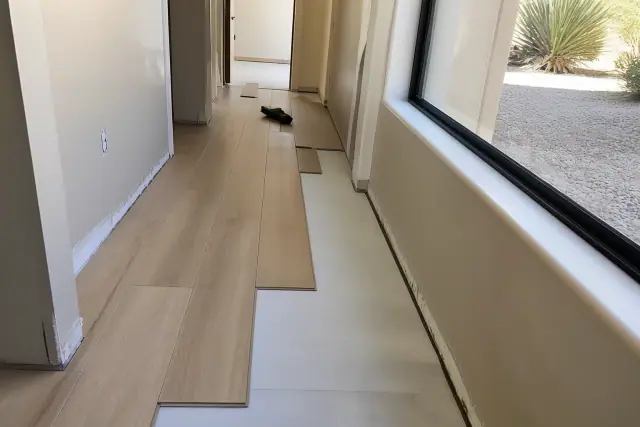
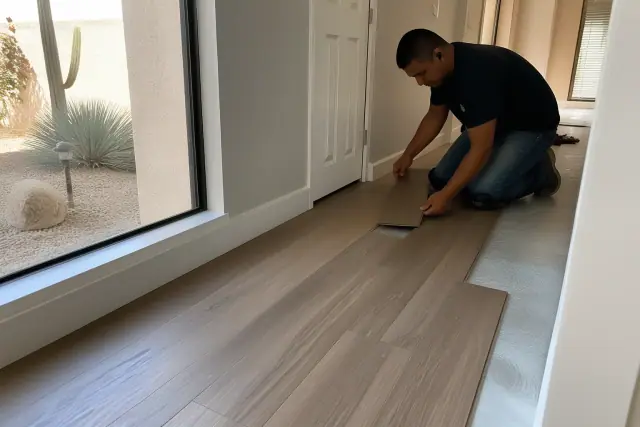
Worker installing luxury vinyl plank flooring in a narrow hallway of a home in Phoenix, AZ.

Residential installation can carry one coordinated LVP surface through kitchens, bathrooms, laundry rooms, entryways, hallways, family rooms, and bedrooms. Core type and wear layer are chosen around moisture, traffic, children, pets, and the feel homeowners want underfoot.

Request Estimate

Commercial LVP Installation

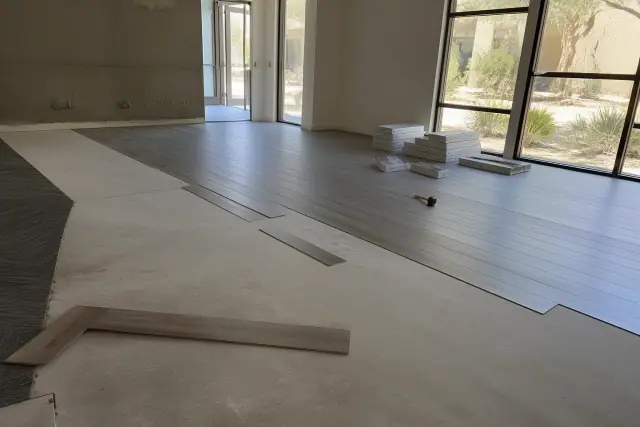
Installation of luxury vinyl plank flooring in a commercial office space in Phoenix, AZ.

Retail spaces and office buildouts need surfaces that handle rolling carts, desk chairs, frequent cleaning, and continuous foot traffic. Commercial-grade vinyl plank with a 20 mil or higher wear layer is built for a 10 to 15 year service life under business traffic, while epoxy remains an alternative for spaces where chemical resistance or seamless sanitation matters more than a plank appearance.

Request Estimate

Click-Lock Floating Installation

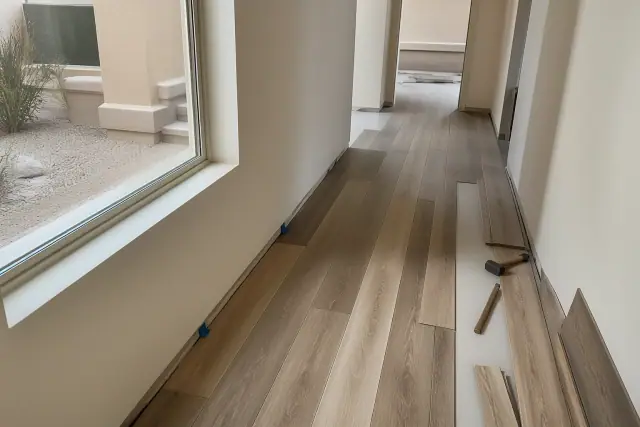
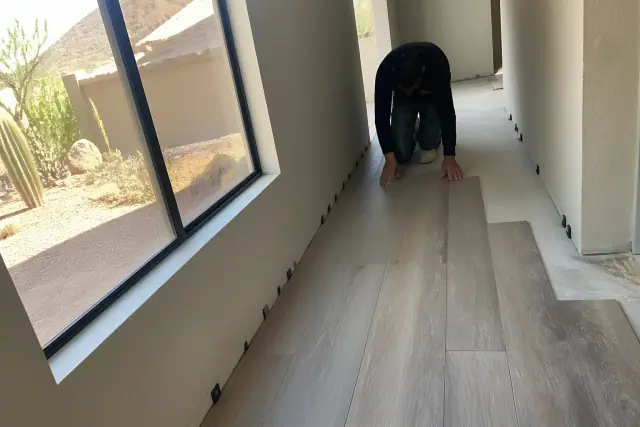
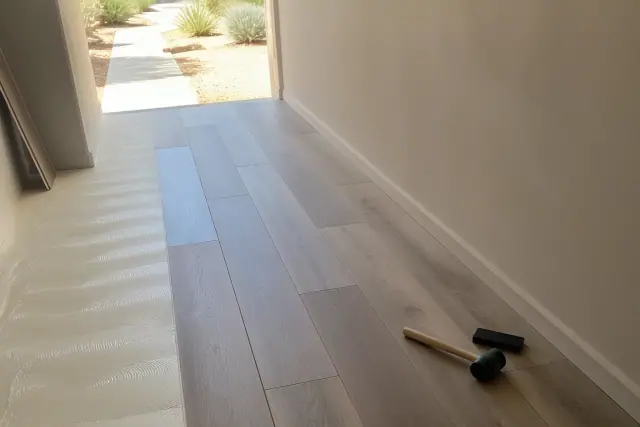
Luxury vinyl plank flooring with a staggered click-lock pattern being installed in a hallway in Phoenix, AZ.

Click-lock planks join into a floating floor that can expand and contract with indoor temperature changes. A compatible foam or cork underlayment may be used for sound control and minor surface variation, while perimeter gaps and transitions are detailed for the selected product.

Request Estimate

Glue-Down LVP Installation

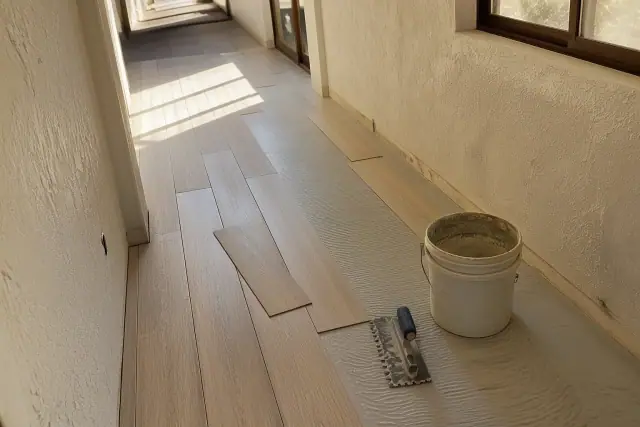
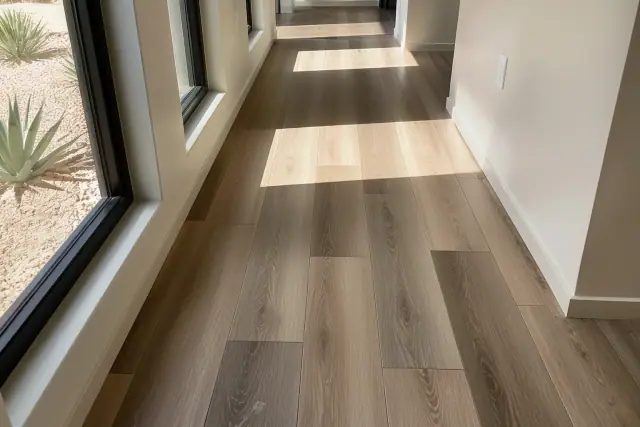
Luxury vinyl plank flooring being installed in a sunny hallway in Phoenix, AZ.

Full-spread glue-down installation creates commercial-grade stability for rolling loads and heavy use. It requires a fully cured, dry, properly prepared slab and the adhesive trowel notch specified for the flooring product.

Request Estimate

Subfloor Preparation and Leveling

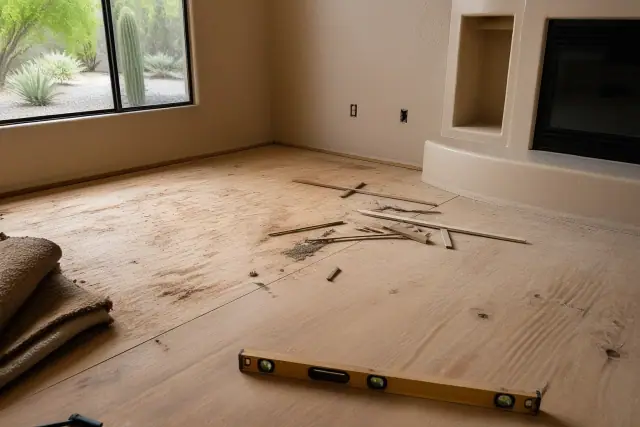
Technician leveling a wooden subfloor during a home renovation project in Phoenix, AZ.

Concrete is inspected for moisture, cracks, high spots, and low spots before planks go down. Patching and self-leveling compound can bring the surface within manufacturer flatness tolerances, typically 3/16 inch over a 10-foot span, helping prevent clicking, hollow areas, and early seam failure.

Request Estimate

Existing-Floor Removal and Transition Detailing

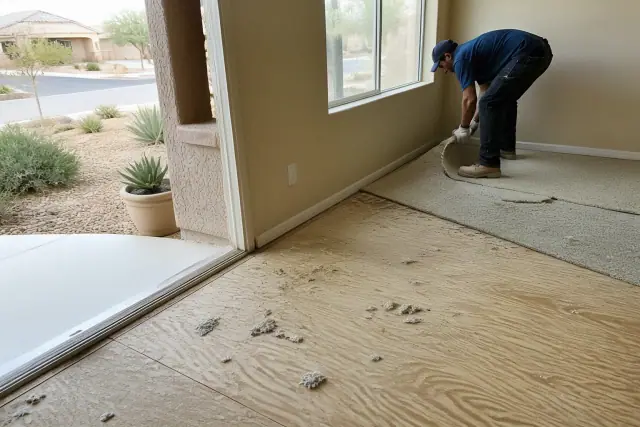
Technician removing carpet to prepare a wooden subfloor for new flooring at a residential job site in Phoenix, AZ.

When a project includes existing-floor removal, that work is planned alongside furniture moves and subfloor preparation. Transition details and wall gaps are then completed according to the room layout and manufacturer requirements.

Request Estimate
Core, Style, and Surface

Luxury Vinyl Plank Types & Finishes

Core construction affects rigidity and comfort, while the design layer, wear layer, and finish determine appearance and surface performance. Comparing these elements makes it easier to match a floor to Phoenix sun exposure, room traffic, pets, and design goals.

Staggered SPC rigid-core vinyl plank flooring in a Phoenix, AZ residence with sunlight streaming through a window.

SPC Rigid-Core Vinyl Plank

SPC, or stone polymer composite, uses a dense rigid core that stays dimensionally stable under heat. Its rigidity can suit sunrooms, garages, appliance areas, and other spaces where point-load resistance matters.

  • Dense stone polymer composite construction
  • Greater dimensional stability under heat
  • Rigid support over properly prepared slabs
  • Better point-load performance than softer WPC
  • Useful for high-heat or heavily loaded rooms
Request Estimate
A contractor installing WPC luxury vinyl plank flooring in a narrow hallway in Phoenix, AZ.

WPC Comfort-Core Vinyl Plank

WPC, or wood polymer composite, provides more comfort underfoot than denser SPC. It remains waterproof but is slightly softer, so room temperature and concentrated furniture or appliance loads should be considered.

  • Wood polymer composite core
  • More cushioned feel underfoot
  • Waterproof construction for interior rooms
  • Less rigid than SPC in high-heat spaces
  • Appliance coasters or a thin plywood base help spread point loads
Request Estimate
Worker installing wood-look vinyl plank flooring in a narrow Phoenix, AZ hallway with bright desert light.

Wood-Look Vinyl Plank

Wood-look LVP recreates familiar grain and plank proportions without solid hardwood's moisture and humidity sensitivity. Plank width, finish, and pattern can be selected to complement both newer and historic Phoenix-area interiors.

  • White oak grain patterns
  • Hickory grain patterns
  • Walnut grain patterns
  • Wide-plank matte looks seen in Gilbert and Queen Creek
  • Narrower historic looks suited to Willo and Coronado remodels
Request Estimate
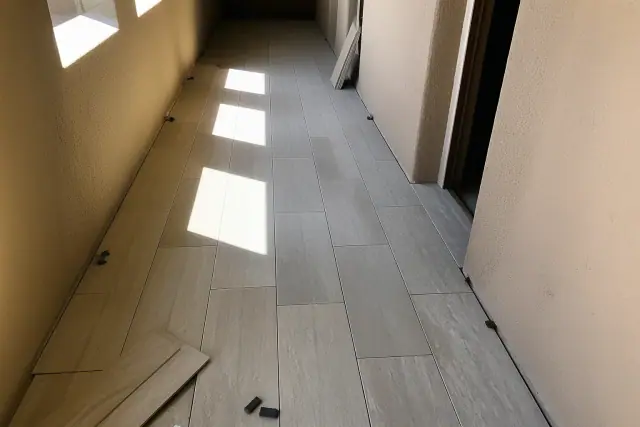
Stone-look vinyl plank flooring installation in progress in a Phoenix, AZ hallway with natural desert sunlight.

Stone-Look Vinyl Plank

Stone-look LVP offers Southwest-inspired visuals without tile's cold surface or grout maintenance. Waterproof cores also make these designs practical for rooms next to sinks, tubs, dishwashers, and laundry equipment.

  • Travertine-inspired visuals
  • Slate-inspired visuals
  • No grout lines to maintain
  • Warmer feel underfoot than tile
  • Waterproof core for kitchens, baths, and laundry rooms
Request Estimate
A contractor installs luxury vinyl planks in a Phoenix, AZ corridor with sunlight and desert landscaping visible nearby.

Wear Layers and Surface Finishes

The wear layer and finish determine how well LVP resists grit, pet claws, scuffs, and repeated cleaning. Surface features can be matched to bedrooms, busy family spaces, and light-commercial use rather than using one grade everywhere.

  • 12 mil options for value-focused household traffic
  • 20 mil and higher for dogs and high-traffic zones
  • Reinforced urethane coatings for scratch resistance
  • Embossed-in-register textures that help conceal scuffs
  • FloorScore-certified choices for indoor air quality
Request Estimate
Finding Your Right Fit

Choosing the Right LVP Approach

A suitable LVP specification balances core type, wear layer, finish, installation method, and subfloor condition. Room moisture, direct sun, traffic, pets, rolling loads, appliance weight, and comfort expectations all influence whether SPC or WPC and floating or glue-down installation make sense.

Standards-Based Installation

Crews follow ASTM F1700 and ASTM F3261 standards for resilient and rigid-core flooring along with manufacturer-specific installation requirements. Product instructions guide adhesive, expansion, transition, and preparation details for the selected floor.

Subfloor Testing and Preparation

A calibrated meter is used to check slab moisture before floating or glue-down work begins. The installation plan also accounts for cracks, flatness, patching, self-leveling needs, and manufacturer moisture thresholds.

Product Matching and Written Quotes

Core construction, wear layer, coating, and installation method are matched to how the room will be used. An in-home assessment and written quote establish the scope before material is ordered.

What Sets Our Work Apart

Why Choose Phoenix Expert Flooring for LVP Installation?

Installers are trained in subfloor moisture testing, transition detailing, and manufacturer-specific requirements intended to keep the selected product's warranty intact. The process starts with a straightforward site assessment and written quote so preparation, material, and installation choices are defined before ordering.

Request a Written Quote

Uneven or Cracked Concrete

Older slab-on-grade homes in areas such as Sunnyslope and Encanto can have cracks, high spots, or low spots. Installing over those conditions without correction can lead to clicking, hollow sounds, and premature seam failure.

Moisture Vapor in Concrete Slabs

Concrete must test below the flooring manufacturer's moisture-vapor threshold before installation. Readings help determine whether the slab needs additional drying, a moisture-mitigating primer, or other preparation before adhesive or a floating floor is placed.

Heat and UV Exposure

Direct sun through west- and south-facing glass can stress flooring in sunrooms, great rooms, and homes with large window walls. With 300-plus days of sunshine, Phoenix rooms benefit from stabilized cores and UV-resistant surface protection selected for their exposure.

Dust, Grit, and Abrasion

Monsoon dust and sand tracked in from desert landscaping can act like an abrasive underfoot. A suitable wear layer and reinforced finish help resist dulling and scuffs, while regular sweeping removes grit before it is ground into the surface.

Heavy Furniture and Appliance Loads

Furniture feet and appliances can create localized dents, especially on softer WPC products. Coasters or a thin plywood base spread refrigerator weight, while denser SPC generally handles point loads better.

Wear Layer Too Thin for Traffic

A thin wear layer can scratch or scuff sooner under pets, entryway grit, rolling loads, and busy family traffic. Matching the surface grade to each room helps avoid paying for commercial performance in bedrooms or under-specifying heavily used spaces.

How It Works

Our Luxury Vinyl Plank Installation Process

The installation process moves from measurement and subfloor evaluation through preparation, material placement, transitions, and care guidance. Each stage is adjusted to the selected product, room use, slab condition, and floating or glue-down method.

01.

In-Home Measurement

The project starts with room measurements and a review of furniture, existing flooring, transitions, appliances, traffic, pets, moisture exposure, and direct sun. These details shape product quantities and the installation plan.

02.

Subfloor Inspection

The crew checks the slab or other subfloor for cracks, residue, high spots, low spots, and conditions that could affect adhesion or plank joints. Existing-floor removal and furniture moves are identified before preparation begins.

03.

Moisture and Flatness Testing

A calibrated meter checks concrete moisture against the product manufacturer's threshold, and the surface is checked against its flatness tolerance. Test results determine the required preparation for floating or glue-down installation.

04.

Surface Preparation

The subfloor is cleaned, dried, patched, or leveled as needed. A moisture-mitigating primer, self-leveling compound, compatible underlayment, or specified adhesive is used according to the slab, flooring product, and installation method.

05.

Plank Installation and Transitions

Planks are installed as a click-lock floating floor or with full-spread adhesive. Expansion gaps, transition details, and layout are completed according to indoor temperature conditions and manufacturer-specific requirements.

06.

Project Completion and Care Guidance

A typical 1,000- to 2,000-square-foot residential installation takes one to three days, depending on subfloor preparation, furniture moves, and existing-floor removal. Final guidance covers regular sweeping, routine mopping, prompt spill cleanup, and protection beneath furniture and appliances.

Plan Your Phoenix Project

Schedule Your Luxury Vinyl Plank Assessment

Request an in-home assessment to compare core types, wear layers, finishes, installation methods, and subfloor needs for your space. Phoenix Expert Flooring provides a written quote before material is ordered.

Phoenix LVP Help

Luxury Vinyl Plank Flooring FAQs

These answers cover product tradeoffs, subfloor preparation, pets, appliances, cost, lifespan, waterproofing, installation methods, and commercial use. A site assessment is still needed to match the product and preparation to a specific room.

Call Our Flooring Team

LVP can dent under heavy point loads, and lower-grade wear layers can scratch or scuff sooner. It cannot be refinished like solid hardwood, so worn planks must be replaced. Budget products may also feel or sound hollow, although acoustic underlayment can reduce that effect.

The subfloor must be clean, dry, and flat. Concrete may need a moisture-mitigating primer, crack patching, or self-leveling compound. Floating floors can use a compatible foam or cork underlayment, while glue-down floors require a fully cured slab and the correct adhesive trowel notch.

Normal walking usually does not scratch quality LVP with a 12 mil or higher wear layer, but active or larger dogs can mark lower-grade products over time. A 20 mil or higher wear layer and enhanced urethane finish are better suited to dog households. Trimmed nails and rugs in high-activity zones add protection.

Yes, but the refrigerator's weight should be distributed to reduce localized indentation. Appliance coasters or a thin plywood base can spread the load. Rigid SPC generally handles concentrated appliance weight better than softer WPC.

Materials typically run $2 to $7 per square foot, while clearance products can be under $1 per square foot but may have thin wear layers. Professional labor generally adds $1.50 to $3 per square foot. A 1,500-square-foot home may total $6,000 to $12,000 installed, while a 500-square-foot remodel may be closer to $2,000 to $3,500. Subfloor preparation, existing-floor removal, and floating versus glue-down installation affect the final written quote.

Quality LVP with a 12 to 20 mil wear layer typically lasts 15 to 25 years under normal residential use. Base-grade PVC products are closer to 12 to 15 years. Correct expansion gaps, subfloor preparation, routine sweeping, and prompt spill cleanup help the floor reach the longer end of its service range.

Yes. SPC and WPC use waterproof PVC or composite cores, unlike laminate's moisture-sensitive wood-fiber core. The core's water resistance does not mean seams should hold standing water indefinitely, so spills should still be cleaned promptly.

SPC has a denser stone polymer composite core that provides greater rigidity and dimensional stability under heat. WPC uses a wood polymer composite core that feels more comfortable underfoot but is slightly softer under concentrated loads and in high-heat rooms. Both core types are waterproof.

Click-lock creates a floating floor that can move with indoor temperature changes and may use acoustic underlayment. Glue-down installation provides greater stability for rolling chairs, carts, and continuous commercial traffic. The better method depends on the product, room use, subfloor condition, and moisture readings.

A typical 1,000- to 2,000-square-foot residential project takes one to three days. The schedule changes with furniture moves, existing-floor removal, crack repair, leveling, moisture mitigation, and the chosen installation method.

A 12 mil wear layer can suit everyday household traffic and value-focused projects. A 20 mil or higher layer is better suited to dogs, entryways, family rooms, and light-commercial use. The finish and coating also matter because reinforced urethane can improve scratch resistance.

Yes. Commercial-grade LVP can be specified for retail spaces, offices, gyms, medical offices, and restaurants when a wood or stone appearance is appropriate. A 20 mil or higher wear layer is built for a 10 to 15 year service life under continuous business traffic, while glue-down installation helps control movement from rolling loads.

Typical installed LVP runs $4 to $10 per square foot with a 15- to 25-year lifespan. Laminate runs $3 to $8 with 10 to 20 years of service. Solid hardwood runs $8 to $15 and can last 30-plus years because it is refinishable, while tile runs $7 to $14 and can last 20-plus years. Moisture sensitivity, underfoot feel, grout upkeep, and Phoenix humidity conditions also affect the choice.