Proudly serving Phoenix, Scottsdale, Glendale, Tempe, Mesa, Chandler & surrounding areasCall or Text 24/7: 480-264-9683
Aerial drone view of a suburban residential neighborhood with desert landscaping and saguaro cacti in Phoenix, AZ.

Tile Flooring Installation & Custom Layouts in Phoenix, AZ

Phoenix Expert Flooring installs tile flooring for homes and businesses in Phoenix and across the Salt River Valley. Our flooring services also include luxury vinyl plank, hardwood, laminate, carpet, epoxy flooring, hardwood refinishing, and floor repair and replacement. We work in residences as well as offices, retail spaces, and multifamily properties. Tile is our specialty because it performs well on desert slabs when the substrate, adhesive, and grout are matched to the room.

Phoenix heat, fine desert dust, hard water, and slab movement all affect how a tile floor should be built. We follow Tile Council of North America (TCNA) handbook methods and ANSI A108 setting standards, with ANSI A118.10 and A118.12 membranes on wet-area and large-format work. For large-format tile, we select the underlayment and mortar for the substrate and back-butter the tile to reduce voids and edge lippage. Wet-saw cutting with water-fed dust control helps our crews work within OSHA's respirable crystalline silica limits.

Choose from ceramic, porcelain, granite, slate, Saltillo, glass, marble, and specialty patterns. Call for a measured, written estimate that separates material and labor before work begins.

Phoenix Expert Flooring provides tile flooring installation throughout Phoenix and the Salt River Valley, including Scottsdale, Tempe, Mesa, Glendale, and Chandler.

★ ★ ★ ★ ★4.9/5 Average Rating · 20+ Years of Experience · Thousands of Customers Helped · Licensed & Insured · Residential & Commercial

Tile Flooring Options & Benefits

What Is Tile Flooring?

Tile flooring is a hard surface assembled from individual ceramic, porcelain, natural stone, glass, or specialty tiles set over a prepared slab or subfloor. The tile type, mortar, membrane, joint width, grout, and sealer work together as one installation.

In Phoenix, porcelain is often the stronger fit for bathrooms, entryways, and sunny or high-traffic rooms because it is denser and less porous than ceramic. Ceramic remains an affordable choice for kitchens, living areas, and hallways when the room conditions and maintenance plan suit it.

A lasting floor starts below the visible surface. Flatness correction, crack isolation, wet-area waterproofing, movement joints, proper mortar coverage, and sealing help tile tolerate heat, moisture, grit, and normal building movement.

Benefits of Tile Flooring

Tile combines long-term durability with broad material and design choices for Phoenix homes and commercial spaces. The right surface can handle traffic, moisture, direct sun, and routine desert dust without sacrificing a clean, finished look.

  • Long service life when the substrate and setting materials are correct
  • A cooler feel underfoot in Phoenix heat than many soft or resilient floors
  • Porcelain options for water resistance, traffic, and sunny rooms
  • Slip-resistant surfaces for bathrooms, entries, patios, and pool areas
  • Design flexibility with stone, mosaics, geometric patterns, and large formats
  • Individual cracked or loose pieces can often be repaired when surrounding tile is sound
  • Durable choices for homes, offices, retail spaces, restaurants, and multifamily properties
  • Straightforward cleaning with regular dust removal and pH-neutral products
Phoenix Tile Services

Complete Tile Flooring Services

Our tile work covers material selection, layout, substrate preparation, installation, repair, and replacement. Each project is planned around the room's moisture, traffic, sunlight, slab condition, and desired pattern.

Ceramic and Porcelain Tile Installation

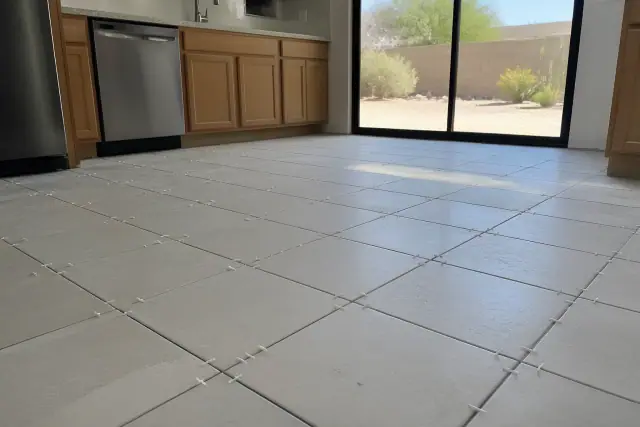
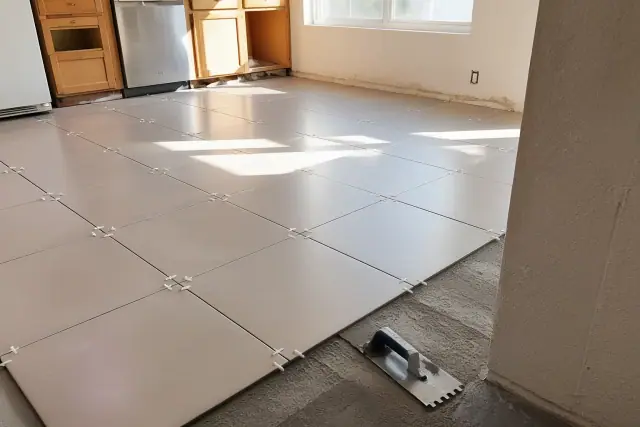
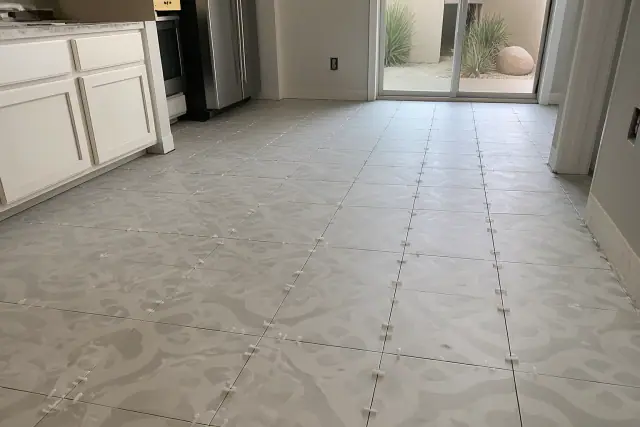
Ceramic tile installation with plastic spacers on a kitchen floor in Phoenix, AZ.

Ceramic offers an approachable option for kitchens, living rooms, entries, and hallways, while denser porcelain suits bathrooms, sunny rooms, and higher-traffic spaces. We match mortar, grout, and surface finish to the tile and the way the room is used.

Request Estimate

Natural Stone and Marble Tile

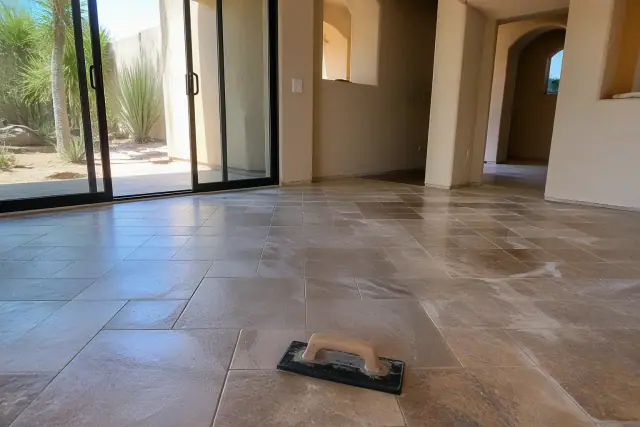
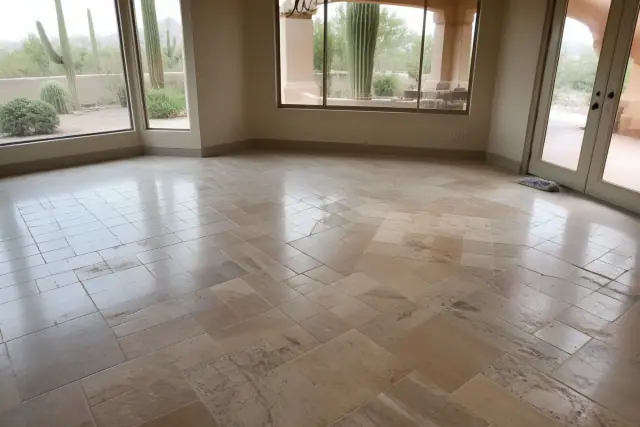
Natural stone and marble tile flooring with mortar haze during installation in a dining area in Phoenix, AZ.

We install granite, slate, travertine, and marble with the sealing and cleaning needs of each stone in mind. Because mineral-heavy water and acidic cleaners can etch stone, the protection plan is part of the installation rather than an afterthought.

Request Estimate

Specialty Tile and Pattern Layouts

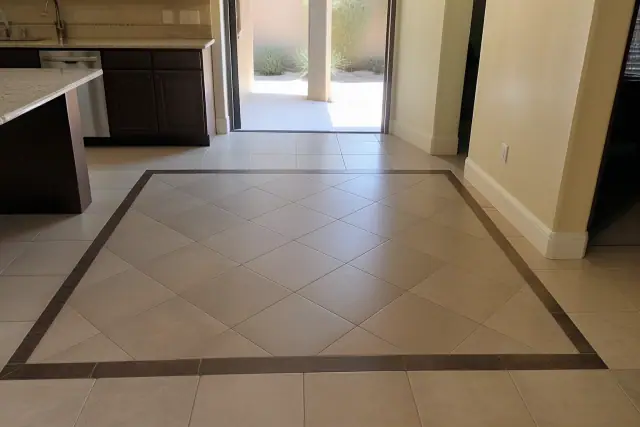
Diagonal ceramic tile flooring with a contrasting border in a residential kitchen in Phoenix, AZ.

Large-format, encaustic, hand-glazed, mosaic, hexagon, penny-round, herringbone, chevron, and diagonal layouts require careful dry planning before setting begins. We establish centerlines and balanced perimeter cuts so the finished pattern reads cleanly across the room.

Request Estimate

Kitchen and Bathroom Tile

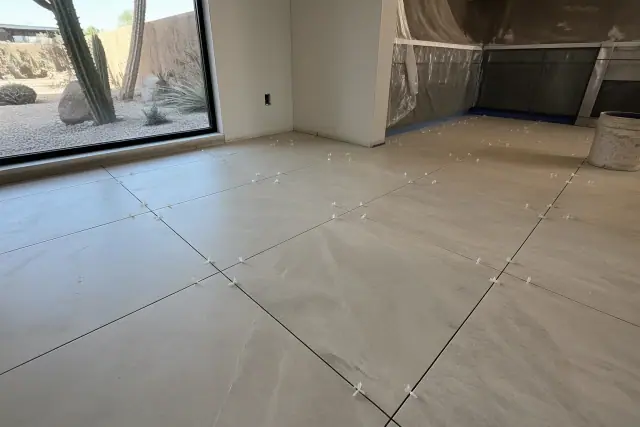
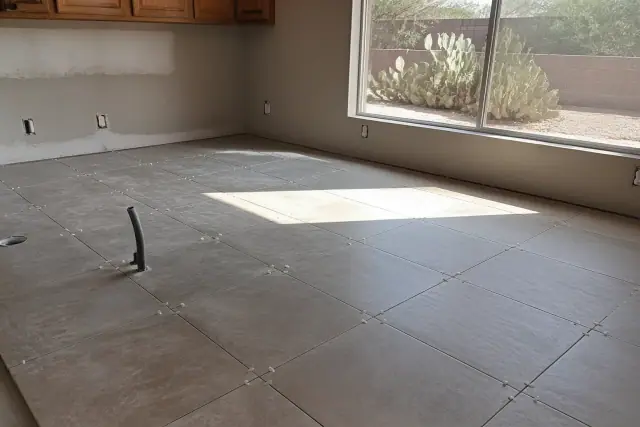
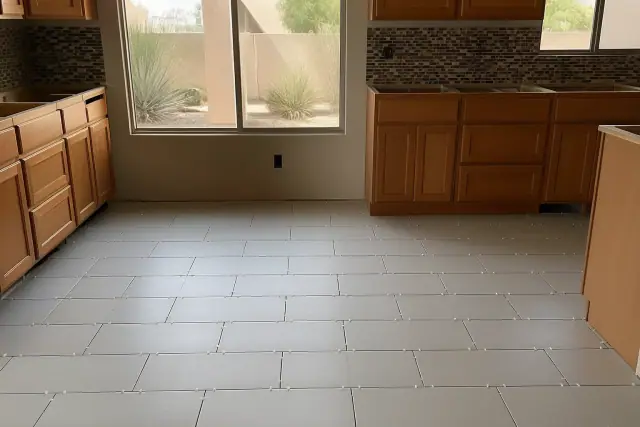
Ceramic tile flooring installation with spacers and view of desert landscaping in a kitchen in Phoenix, AZ.

Kitchen floors need point-load resistance beneath appliances and cabinetry, plus waterproofing around sink and dishwasher zones. Bathroom floors and shower pans receive wet-area methods suited to the assembly, with radiant heat tile available for clients who want a warmer surface.

Request Estimate

Outdoor and Pool Tile

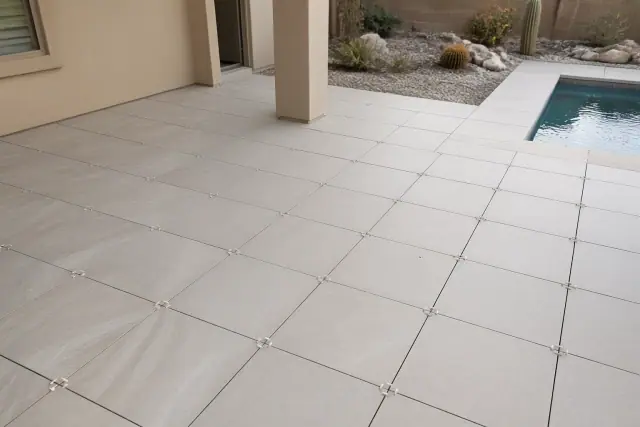
New ceramic outdoor and pool tile flooring with grout lines installed on a residential patio in Phoenix, AZ.

Patios and pool areas need low-absorption, slip-resistant surfaces that can tolerate irrigation, monsoon rain, chlorine, heat, and ultraviolet exposure. Pool installations use porcelain or glass mosaic with water-resistant setting materials and epoxy grout.

Request Estimate

Tile Repair and Replacement

New ceramic tiles being installed with spacers on a kitchen floor during a repair project in Phoenix, AZ.

Cracked, loose, hollow-sounding, or uneven tile can point to slab movement, failed mortar, damaged grout, or missing movement accommodation. We diagnose the cause first, then recommend a focused repair or full replacement based on how far the failure has spread.

Request Estimate
Tile Materials and Designs

Types of Tile Flooring Options

The best tile is the one that fits the room, substrate, water exposure, traffic, sunlight, maintenance expectations, and design. These material and pattern groups cover the choices most relevant to Phoenix properties.

Ceramic and porcelain tile installation on a kitchen floor with spacers in Phoenix, AZ.

Ceramic and Porcelain Tile

Ceramic and porcelain can deliver similar colors, sizes, and patterns, but they differ in density, absorption, cost, and wear. We compare those traits against the room instead of defaulting to one material everywhere.

  • Ceramic for budget-conscious interior rooms
  • Porcelain for lower water absorption and heavier traffic
  • Slip-resistant finishes for wet or active areas
  • Large-format and geometric looks in either material
  • Room-specific mortar, grout, and maintenance guidance
Request Estimate
Natural stone and marble tile flooring in a Phoenix, AZ dining area with desert landscape visible through the windows.

Natural Stone and Marble

Natural stone adds color and texture that a printed surface cannot fully duplicate, but it needs a more deliberate protection plan. We account for the porosity and chemical sensitivity of granite, slate, travertine, and marble.

  • Granite and slate for varied natural texture
  • Travertine for warm, dimensional stone character
  • Marble protected from acidic cleaners and hard-water etching
  • Penetrating sealer applied as part of installation
  • pH-neutral cleaning to protect the finished surface
Request Estimate
Large-format patterned tile installation with spacers on a kitchen floor in Phoenix, AZ.

Large-Format and Patterned Tile

Larger pieces and directional patterns make slab flatness, mortar coverage, and layout accuracy especially important. We plan the full field before setting so focal lines and perimeter cuts stay intentional.

  • 12x24 and 18x18 formats prepared for flatness and coverage
  • Back-buttering to reduce voids beneath large tile
  • Herringbone, chevron, and diagonal layouts
  • Dry-laid centerlines and symmetrical wall cuts
  • Encaustic, Moroccan, and geometric pattern options
Request Estimate
New subway, glass, and mosaic tile flooring with installation spacers in a kitchen in Phoenix, AZ.

Subway, Glass, and Mosaic Tile

Small-format tile can add detail to entries, bathrooms, transitions, and low-traffic accents. The setting material and sheet alignment matter because color transfer, inconsistent spacing, and visible seams are difficult to hide.

  • Classic 3x6 and 4x8 subway formats
  • Running-bond or herringbone subway layouts
  • White thin-set beneath translucent glass tile
  • Mesh-mounted mosaics for consistent field spacing
  • Custom patterns, medallions, and Aztec-inspired details
Request Estimate
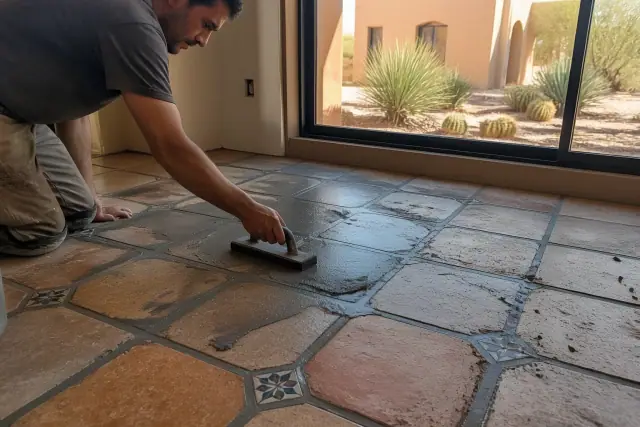
Contractor using a rubber float to apply mortar between handmade tiles on a dining room floor in Phoenix, AZ.

Handmade and Southwest-Inspired Tile

Saltillo, Zellige, encaustic, and hand-glazed tile bring irregular edges, color variation, and handmade character that complements Mediterranean and Spanish-influenced Phoenix architecture. Layout and joint spacing are adjusted to make that variation feel cohesive.

  • Saltillo tile with warm regional character
  • Zellige tile with intentional size and glaze variation
  • Encaustic tile for decorative floor fields
  • Spanish and Moroccan-inspired patterns
  • Hexagon and penny-round geometric layouts
Request Estimate
Finding the Right Fit

Choosing the Right Tile Flooring Approach

Material choice starts with the actual room: slab condition, moisture, foot traffic, sunlight, cleaning habits, transitions, and floor height. A measured estimate lets us compare ceramic, porcelain, stone, and specialty layouts with the preparation and labor each one requires.

Standards-Based Tile Installation

We use TCNA handbook methods and ANSI A108 setting standards, with ANSI A118.10 waterproofing and A118.12 crack-isolation membranes where the assembly calls for them. That keeps the installation method tied to the substrate, tile size, and exposure.

Substrate-Specific Preparation

Old mastic, epoxy, and adhesive are removed before the new assembly is built. We check for flatness, visible movement, active moisture, and transition-height issues, then grind, level, or isolate the slab as the conditions require.

Phoenix-Focused Material Guidance

Direct desert sun, hot slabs, mineral-heavy water, monsoon moisture, and fine airborne grit change how tile should be selected and maintained. We steer each room toward a surface, finish, grout, and sealer suited to those Phoenix conditions.

What Sets Our Tile Work Apart

Why Choose Us for Tile Flooring Installation?

Phoenix Expert Flooring provides a measured, written estimate before work begins, then specifies the preparation and setting materials around the real substrate and tile. Our process includes cause-first repair diagnosis, planned layouts, water-fed dust control, and clear material-versus-labor scope.

Request an Estimate

Thermal Expansion and Cracked Grout

Large uninterrupted tile fields expand and contract as Phoenix slabs and rooms heat up. Without properly placed movement accommodation following TCNA EJ171 guidance, grout can split and cracks can transfer into the tile.

Slab Movement and Loose Tile

A loose or hollow-sounding tile often points to slab movement, mortar debonding, or incomplete coverage rather than a defective tile. Replacing the visible piece without correcting the cause can allow the failure to return.

Moisture and Hard-Water Buildup

Monsoon moisture, irrigation near entryways, and mineral-heavy water can stain grout, weaken vulnerable joints, or leave deposits on stone. Waterproofing, suitable grout, sealing, and pH-neutral cleaning address different parts of that problem.

Large-Format Tile Lippage

Long tile edges reveal slab variation quickly, creating uneven corners when the surface is not flat or mortar coverage is inconsistent. Straightedge checks, surface correction, dry layout, and back-buttering help the field finish evenly.

Sun-Heated Outdoor Tile

Dark outdoor tile can climb well above the air temperature on a 110-degree Phoenix afternoon. Lighter-toned porcelain or textured stone is usually more comfortable for patios and pool decks that see bare feet.

Desert Dust and Worn Sealer

Fine desert dust acts as an abrasive on glazed surfaces, natural stone, and grout when it stays underfoot. Regular sweeping, pH-neutral cleaning, and timely resealing help prevent dulling, staining, and hard-water etching.

How It Works

Our Tile Flooring Process

A reliable tile floor depends on the sequence beneath the finish as much as the tile itself. We move from measurement and diagnosis through preparation, layout, setting, grouting, sealing, and final care guidance.

01.

Measured Estimate and Scope Review

We measure the floor, review the room's use and desired material, and identify tear-out, disposal, transitions, and access needs. The written estimate separates material and labor so the scope is clear before installation begins.

02.

Slab and Subfloor Assessment

We check slab flatness with a 10-foot straightedge against TCNA's 1/8-inch-in-10-foot tolerance, then inspect for movement, moisture, and old adhesive. Grinding, self-leveling, cleaning, or removal is completed before the new assembly starts.

03.

Layout and Pattern Planning

Full tiles or sheets are dry-laid to establish centerlines, grout joints, pattern direction, and balanced perimeter cuts. Herringbone, chevron, diagonal, mosaic, and handmade layouts receive extra planning for alignment and variation.

04.

Membrane and Mortar Selection

Waterproofing or crack-isolation membrane is applied where the room and slab require it. Thin-set mortar is selected for the tile material and size rather than treated as a one-product-fits-all choice.

05.

Tile Setting and Grouting

Tile is set to the planned lines, with large formats back-buttered to reduce voids and control lippage. Sanded, unsanded, or epoxy grout is selected according to joint width, exposure, and traffic.

06.

Sealing and Final Review

After curing, natural stone and grout joints are sealed where appropriate. We review the finished surface, transitions, cleaning products, and signs such as spreading cracks or hollow sounds that should be addressed early.

Plan Your Tile Project

Schedule a Tile Flooring
Consultation

Tell Phoenix Expert Flooring about the room, material, pattern, and problems you want to solve. We will measure the space and prepare a written estimate for installation, repair, or replacement.

Tile Flooring Help

Tile Flooring FAQs

These answers cover tile costs, materials, installation conditions, repairs, permits, maintenance, and specialty options for Phoenix properties. Call if you want to compare them against the condition of your floor.

Call Our Flooring Team

Ceramic tile installed typically runs $6.30 to $8.03 per square foot in Arizona, while porcelain ranges from $5 to $20 per square foot depending on size, finish, and layout. Large-format tile, natural stone, and custom patterns can be closer to $16 to $20 per square foot installed when design labor is included. We provide a measured quote that separates material and labor, including any tear-out, substrate preparation, and disposal in the scope.

Properly installed tile can last for decades and, in many homes, for the lifetime of the floor assembly. That is longer than the typical 15 to 25 year service life described for luxury vinyl plank in the source material. Substrate preparation, mortar coverage, grout, movement accommodation, and stone sealing all affect that longevity.

Tile stays cooler underfoot and generally offers greater heat tolerance and longevity, which can favor it in west-facing rooms. Luxury vinyl plank installs faster, often costs less upfront, and provides more cushion. We compare both options against the room's direct sun, standing comfort, moisture, and budget rather than applying one answer everywhere.

Porcelain is fired denser and has a lower water absorption rate, making it a strong option for bathrooms, entries, and high-traffic rooms. Ceramic can provide a more affordable interior floor and typically saves about $1 to $2 per square foot over porcelain installed. Both can support large-format and geometric looks when the substrate and setting method are appropriate.

If less than roughly 15 to 20 percent of the floor is cracked or loose and the surrounding grout is sound, a focused repair is often the more economical choice. Spreading cracks, widespread hollow sounds, active substrate movement, lippage, or discontinued tile that cannot be matched can make replacement more practical. We inspect the substrate before recommending either option.

Straight tile replacement over an existing floor typically does not require a City of Phoenix permit. Plumbing changes, structural subfloor work, or a remodel with new wet-area waterproofing may require review, so the full scope matters. We identify that during the estimate and handle work subject to Arizona Registrar of Contractors requirements when the project calls for it.

Tile can sometimes be installed over a sound, flat, well-bonded ceramic or concrete surface with an appropriate uncoupling membrane. We do not recommend setting over carpet, a cracked substrate, or a surface with active moisture. Added floor height at doors, cabinets, and transitions also has to be measured before that approach is chosen.

Sweep or vacuum fine desert dust regularly and use a pH-neutral cleaner instead of vinegar or other acids, especially on natural stone. Grout and natural stone should be sealed at installation and may need resealing roughly every 12 to 18 months depending on traffic. Hollow sounds or spreading grout cracks should be investigated before the damage grows.

Outdoor areas need a low-absorption surface with slip resistance for irrigation and monsoon moisture. Lighter-toned porcelain or textured stone is more comfortable where patios and pool decks receive direct sun. Pool tile can use porcelain or glass mosaic with polymer-modified, water-resistant thin-set and epoxy grout for constant submersion and chlorine exposure.

Prevention starts with checking and correcting slab flatness before setting. We dry-plan the layout, choose mortar for the tile size and substrate, and back-butter large pieces to reduce voids. Those steps help adjacent edges finish on the same plane.

Sanded, unsanded, and epoxy grout serve different joint widths, traffic levels, and exposure conditions. We choose the grout after the tile, joint, room use, and moisture demands are known. Wet and submerged areas may call for a different product than a dry residential living room.

Kitchen installations account for sink and dishwasher zones, while bathroom work addresses shower pans and floors as a wet-area assembly. We use ANSI A118.10 waterproofing methods where the scope requires them and coordinate the membrane with the substrate, drains, and tile. Radiant heat tile is also available when it fits the planned assembly.

Options include herringbone, chevron, diagonal, geometric hexagon, penny-round, mosaic medallion, Aztec-inspired, encaustic, Spanish, Moroccan, Zellige, and hand-glazed layouts. We dry-plan centerlines, grout joints, pattern direction, and wall cuts before setting. Handmade tile receives additional spacing adjustments for natural size and thickness variation.