Clear the Room
Remove breakables, electronics, personal items, and closet contents. Confirm whether the homeowner, installation crew, or a separate mover will handle every remaining piece.
Phoenix Expert Flooring recommends preparing for carpet installation by clearing the room, cleaning and checking the subfloor, and stabilizing room conditions before the crew arrives. These steps help Phoenix installations avoid delays and give seams, adhesive, padding, and stretch-in tension the conditions they need to set.
Remove breakables, electronics, personal items, and closet contents. Confirm whether the homeowner, installation crew, or a separate mover will handle every remaining piece.
Vacuum and sweep completely, then identify cracks, unevenness, squeaks, or moisture. Concrete may need patching compound or a moisture barrier before installation.
Set the thermostat and establish airflow 48 hours ahead of installation. Stable temperature supports seam bonding, adhesive cure, padding performance, and proper power stretching.
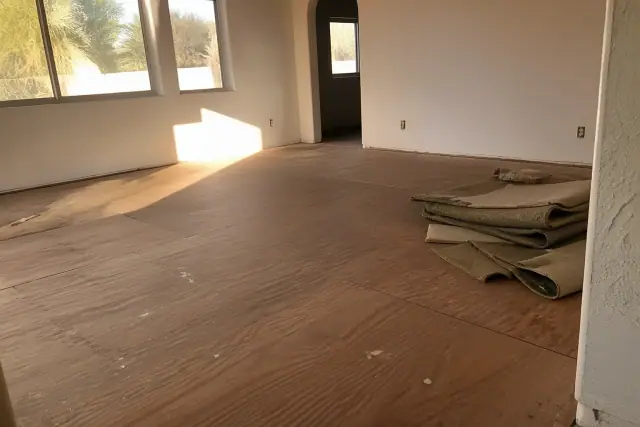
A clear room keeps breakables and electronics away from the work. It also shows which standard or specialty items still need to be moved.
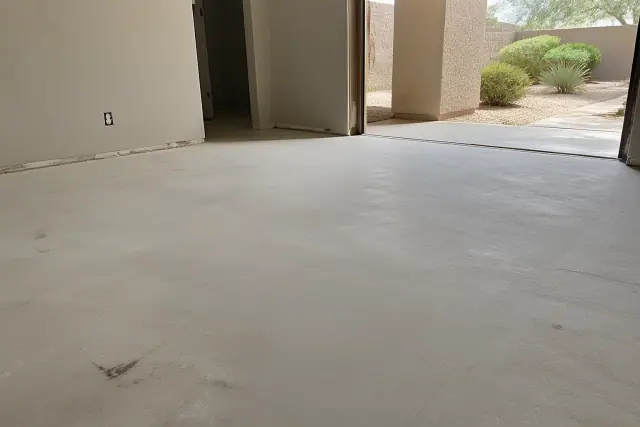
A close view should reveal dust, cracks, uneven areas, or moisture. Those conditions determine whether patching or a moisture barrier is needed.
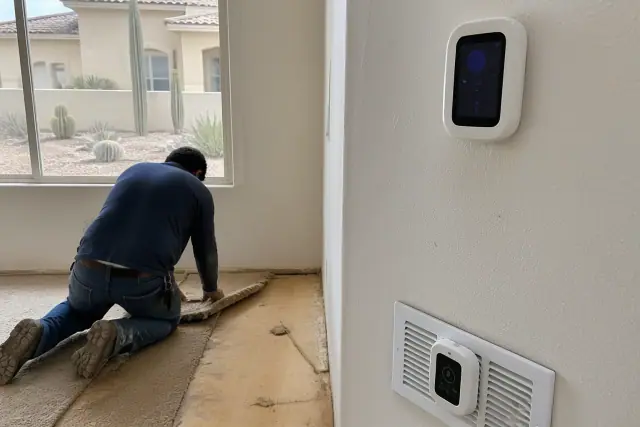
The thermostat should show the correct range while open interior doors or running HVAC maintain airflow. This is especially important during Phoenix summer heat and monsoon humidity.
Clear small and fragile belongings first. Standard couches, chairs, tables, and dressers may be crew-moved, while appliances, pianos, waterbeds, china cabinets, and loaded shelving need separate arrangements.
Concrete, hardwood, and existing laminate require different checks. Moisture, surface level, transitions, and the condition of old carpet and padding can change the preparation scope.
Set the room to 65-95°F, open interior doors for airflow, and keep the conditions steady. In summer, that generally means running the air conditioning instead of leaving the home closed and overheated.
Avoid normal traffic and heavy furniture for at least 24 hours, and do not vacuum for the first few days. Glue-down commercial carpet may require a longer product-specific cure window.
| Timing | Preparation | Why It Matters |
|---|---|---|
| Before the 48-hour window | Confirm the furniture-moving scope; remove small items, breakables, electronics, and closet contents. | Keeps installation time focused on flooring work. |
| 48 hours before | Hold the room at 65-95°F and begin steady airflow. | Helps carpet, seam tape, padding, and adhesive acclimate. |
| Install day | Present a clean, level, dry subfloor and keep pets out of the work area. | Protects the finished floor and avoids tack-strip hazards. |
| First 24 hours after | Limit traffic and do not return heavy furniture. | Allows seams, adhesive, and stretch-in tension to set. |
| 48-72 hours after | Keep windows, interior doors, or HVAC providing active ventilation. | Clears residual odors and supports curing. |
| First few days | Avoid vacuuming fresh seams. | Prevents disturbance while the installation settles. |
Carpet installation preparation has three parts: ready the room, verify the subfloor, and stabilize the indoor environment. That means removing obstacles, agreeing on furniture responsibilities, cleaning the floor, checking for damage or moisture, planning transitions, protecting adjoining spaces, and securing pets. Completing those tasks before the crew arrives keeps labor focused on installation and helps the invoice stay closer to the written quote.
Subfloor material and local conditions change the checklist: a concrete slab in the Camelback Corridor must be clean, level, and dry, while hardwood in a Willo District bungalow or existing laminate in an Ahwatukee home calls for different surface checks. Below-grade slabs in the Salt River Valley need extra waterproofing attention because moisture can wick through concrete even in a desert climate. Fiber type, pile height, padding density, transition details, material lead time, and rush scheduling can also affect the installation scope and timeline. Poor seam placement, incorrect tack-strip placement, inadequate power stretching, or installation over dirt and moisture can cause ripples, lifted edges, seam separation, uneven padding, or mold beneath the carpet.
You do not usually need to empty the room completely: clear closets, small items, breakables, and electronics, then confirm who will move standard furniture, appliances, and specialty pieces. Same-night use may be possible after seams and adhesives have had a few hours to set, but plan to limit traffic for at least 24 hours, and odor-sensitive occupants may prefer to wait a full day before sleeping there. Phoenix carpet installation is described in the source as generally $5-$8 per square foot, with a typical 12-by-12 room at $350-$700 including padding, tack strips, and labor; fiber, pile, padding density, and subfloor condition can change the quote. A written quote should itemize old-carpet removal, disposal, transitions, padding, tack strips, and labor, and the installer should provide the exact cure window for glue-down commercial carpet.
Share the room size, subfloor type, furniture-moving needs, and preferred carpet. Phoenix Expert Flooring can provide a free written quote and confirm the preparation scope, material lead time, and crew availability before installation day.