Wet Mops and Steam
A wet mop leaves liquid at seams, while steam drives moisture into them. Either can swell wood fibers, weaken the finish, and create cupping; steam may permanently damage engineered hardwood in a single use.
Phoenix Expert Flooring sees many hardwood problems in Phoenix begin with preventable habits: wet or steam mopping, harsh cleaners, abrasive tools, direct UV exposure, and unstable indoor humidity. Avoiding those stressors protects the finish and helps keep boards from scratching, fading, warping, or cupping.
A wet mop leaves liquid at seams, while steam drives moisture into them. Either can swell wood fibers, weaken the finish, and create cupping; steam may permanently damage engineered hardwood in a single use.
Ammonia and degreasers strip protection, bleach discolors wood, vinegar and citrus etch finish, and oil soap or wax leaves residue. Steel wool, powdered cleansers, scouring pads, and rotating vacuum brushes add scratches instead of cleaning safely.
Dust-mop daily, use a manufacturer-approved cleaner with a microfiber mop for weekly maintenance, and keep every mop barely moist. Felt pads under furniture and rugs at entries reduce scratches from dragged legs, pet nails, and desert grit.
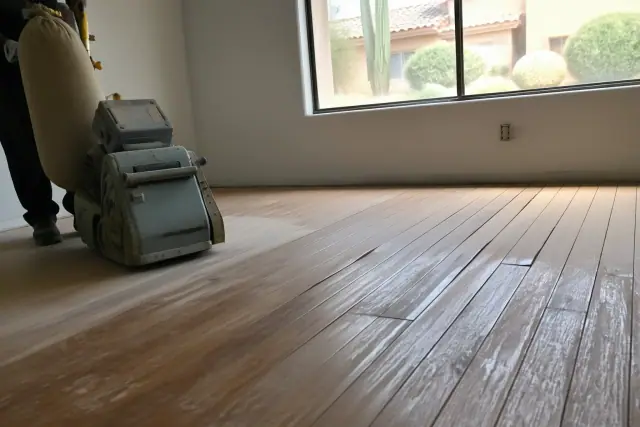
Raised board edges reveal a moisture imbalance that a wet mop, appliance leak, plumbing problem, or swamp cooler condensation may have caused. Seeing the seam profile helps distinguish cupping from surface dirt.
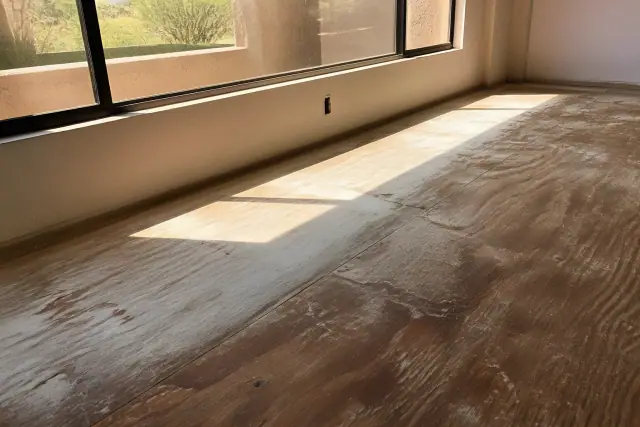
Uneven color beside large south- or west-facing windows points to UV and heat exposure. Comparing covered and exposed boards makes the fading pattern easier to recognize.
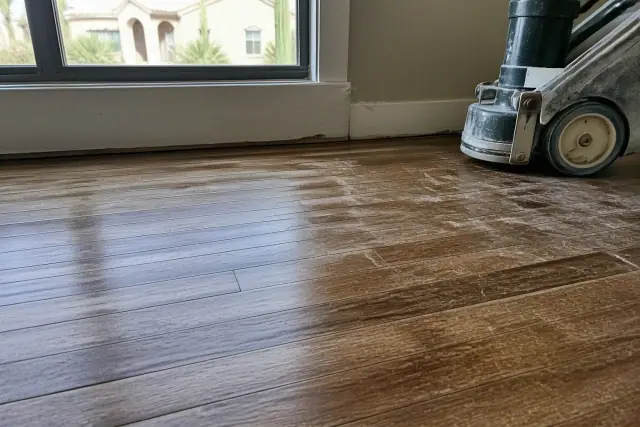
Direct light can reveal micro-scratches, dull wax or oil residue, and grit trapped in the finish. Identifying the surface problem first helps avoid adding another incompatible product.
Use a dry dust mop for daily care and a microfiber mop with a pH-neutral, water-based hardwood cleaner for weekly maintenance. Unfinished wood needs a dry or barely damp cloth, while finished wood tolerates light dampness but no standing liquid.
Phoenix relative humidity can stay below 20% for months, while monsoon moisture rises in July and August before dropping sharply by October. Keep indoor humidity near 35-55% and check it at least twice a year to limit gapping, contraction, and swelling.
A puddle left for 20-30 minutes may start cupping, pet urine can stain and set odor within hours, and wine, coffee, or cooking oil should be wiped within minutes. Rust, ink, or unstable rug dye trapped against wood for days can leave permanent marks.
Do not use generic multi-surface sprays, which may dull polyurethane over 6-12 months, or hot water, which can soften some finishes. Also avoid sponge mops, steam cleaners, steel wool, scouring pads, powdered cleansers, and vacuum beater bars.
| Avoid | Why It Harms Hardwood | Use Instead |
|---|---|---|
| Wet mops and steam | Moisture enters seams and can swell, warp, or cup boards. | A barely damp microfiber mop |
| Ammonia, bleach, vinegar, oil soap, and wax | They can strip, etch, discolor, or coat the finish. | A pH-neutral, water-based hardwood cleaner |
| Scouring pads and rotating brushes | Abrasive contact leaves scratches and a hazy appearance. | A dust mop or hardwood vacuum attachment |
| Direct UV and unstable humidity | Sun fades wood while moisture swings move the boards. | UV-filtering film, rotated rugs, and 35-55% indoor humidity |
Hardwood damage comes from four main sources: moisture, abrasion, chemical breakdown, and UV or heat exposure. Phoenix adds low humidity, swamp cooler moisture spikes, desert grit, and 110-degree afternoons to that mix, so safe care means controlling both cleaning moisture and the room environment. Rotate rugs and furniture every few months and use UV-filtering window film to reduce uneven fading.
Finished and unfinished wood tolerate different moisture levels, and engineered hardwood has a thinner wear layer that makes steam damage especially serious. Isolated scratches, stains, or a few cupped boards may call for cleaning, humidity correction, or individual-board repair; widespread mold, subfloor moisture, or finish failure may require refinishing or replacement. Published data lists Phoenix refinishing at $4.50 to $5 per square foot for three coats without stain, stain at roughly $0.50 to $1 more per square foot, and new installation at generally $6 to $25 per square foot depending on species, plank width, and subfloor condition.
Is hot water safe? Room-temperature water is safer, but the mop must still be barely damp. Can early cupping recover? Humidity control may help when it is caught early, while widespread damage needs an assessment. What commonly causes scratches? Pet nails, dragged furniture, and grit from desert landscaping are the top three causes described in the draft. Can a cleaner remove a dull finish? Professional cleaning may remove wax or oil buildup, but a failing finish may need recoating or refinishing.
Deep cupping, blackened boards, mold, subfloor moisture, or finish failure across a large area goes beyond routine cleaning. An on-site assessment can identify the finish, measure the damage, and clarify whether cleaning, individual-board repair, refinishing, or replacement fits the floor.